For many years, retail store equipment was treated as a commodity. Shopping baskets, carts and in-store tools were selected based on price, availability and basic specifications. If it looked acceptable and met the minimum requirements, it was considered good enough.
That approach is no longer sustainable.
Today, retail store equipment plays a direct role in customer experience, operational efficiency, durability, sustainability and long-term cost control. What was once a background decision has become a strategic one.
This shift is not theoretical. It is happening in real chains, driven by tighter margins, higher customer expectations and more complex store operations.

Retail store equipment as a hidden performance driver
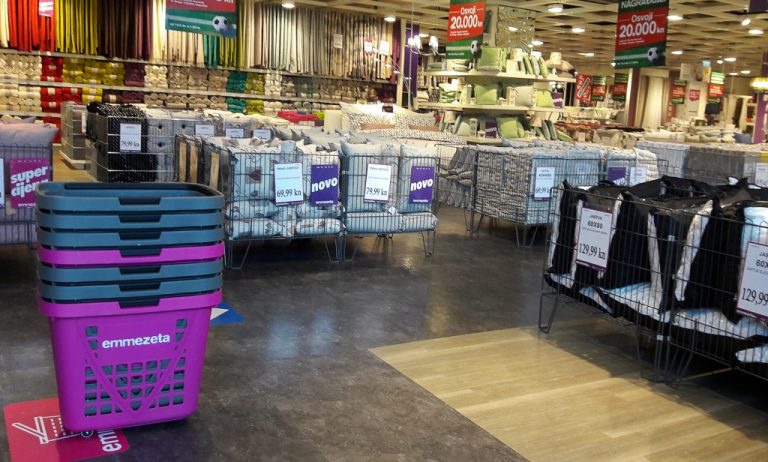
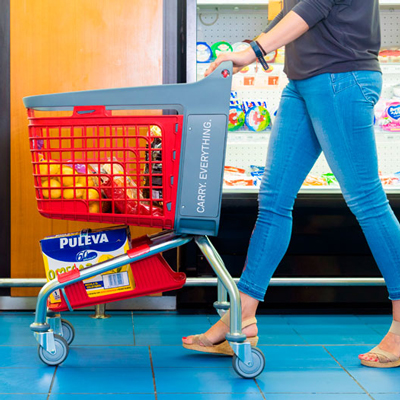
In modern retail, every physical element that interacts with customers or staff affects performance. Shopping baskets and carts influence how customers move, how long they stay and how much they buy. At the same time, they affect staff productivity, replenishment speed and order preparation.
When retail store equipment is selected purely on price, several hidden costs tend to appear later:
- frequent breakage and replacement
- higher maintenance and cleaning effort
- inefficient storage and stacking
- friction in narrow aisles
- customer discomfort during longer visits
These costs rarely appear in the initial purchase decision, yet they accumulate over time.
Why price alone no longer reflects real cost
The main reason price-based decisions fail is simple: unit price is not the same as total cost of ownership.
Total cost of ownership in retail store equipment includes:
- lifespan of the product
- replacement frequency
- impact on store operations
- storage and logistics efficiency
- compatibility with different store formats
- contribution to customer experience
A cheaper basket that breaks sooner or creates operational friction often becomes more expensive over a two- or three-year period than a higher-quality alternative.
This is why leading retailers increasingly evaluate retail store equipment through a long-term lens rather than a procurement checklist.
Shopping baskets and carts are not neutral objects
It is easy to underestimate shopping baskets and carts because they are so familiar. Yet they are among the most frequently used objects in any store.
From the customer’s perspective, they shape:
- comfort during the visit
- ease of movement in aisles
- perceived effort of carrying products
- willingness to continue shopping
From the store’s perspective, they influence:
- circulation flow
- congestion at peak times
- staff time spent managing equipment
- overall store order and appearance
Treating these elements as commodities ignores their real impact.
Retail operations efficiency starts with the basics
Retail operations are becoming more complex. Stores now combine customer shopping, replenishment, click-and-collect, picking and returns within the same physical space.
In this context, retail store equipment must support multiple use cases without creating conflicts. Poorly designed equipment increases friction between customers and staff, slows down operations and raises the risk of damage or errors.
Efficient equipment, on the other hand, becomes almost invisible. It supports flow, reduces unnecessary movement and allows teams to focus on higher-value tasks.
Why strategic retailers rethink equipment decisions
Retailers that approach equipment strategically tend to ask different questions:
- How does this basket perform in narrow aisles
- How does it behave when fully loaded
- How long will it realistically last in high-traffic stores
- How easy is it to stack, store and clean
- Can it adapt to different store formats
- Does it support future operational changes
These questions move the decision away from price and toward performance.
Sustainability reinforces the strategic approach
Sustainability has accelerated this shift. Equipment that lasts longer, uses recycled materials and reduces replacement frequency directly supports environmental goals.
Here again, price alone is misleading. A low-cost product with a short lifespan generates more waste, more transport and more emissions over time than a durable solution designed for long-term use.
Strategic retail store equipment decisions align cost control with sustainability objectives.
Conclusion
Retail store equipment is no longer a background purchase. It is a strategic tool that affects customer experience, operational efficiency, sustainability and long-term cost.
Retailers that continue to buy solely on price often discover hidden costs later. Those who evaluate equipment as part of their store strategy gain better control, smoother operations and more resilient stores.
In today’s retail environment, the cheapest option is rarely the most efficient one.