The forgotten lever for improving the shopping experience by 20%
How ergonomics, wheels and the useful capacity of baskets and carts can help increase the average basket value without refitting the store.
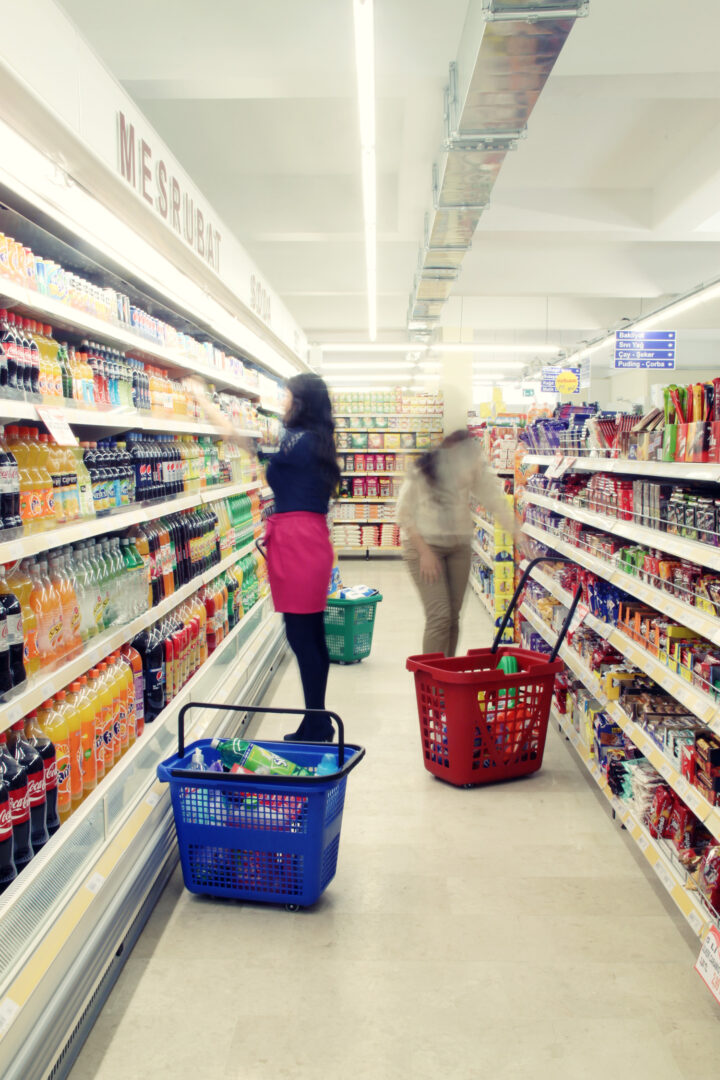
Baskets and carts directly influence the average basket value because they determine dwell time, comfort and the customer’s willingness to carry more. SB Shopping Basket manufactures in Spain hand baskets, rolling baskets and carts with optimised ergonomics, silent polyurethane wheels with double ball bearings and capacities from 10 to 91 litres. A range designed to reduce friction, increase dwell time and improve average basket value in supermarkets, convenience stores, home, fashion and DIY retail. ISO 9001 certified, supply to more than 70 countries.
Increasing the average basket value with baskets and carts doesn’t always require major refits. In retail we tend to think about changing the layout, updating lighting or redesigning the store, but there is a more immediate, affordable and direct lever: improving the shopping baskets, rolling baskets and compact carts the customer uses from the very first moment.

Equipment influences how the shopper moves, how long they stay in store and how much they are willing to carry. Optimising ergonomics, wheels and useful capacity can improve the experience by 15% to 20% and, above all, increase the average basket value without touching a single shelf.
The basket or cart is not just a support for transporting products. It is an active part of the shopping experience and can directly influence the journey, comfort and purchase volume.
Ergonomics: the first step for increasing the average basket value with better equipment
An uncomfortable basket with a poor handle, vibration or badly distributed weight shortens the purchase. The customer simply gets tired and leaves sooner.
An ergonomic basket, on the other hand, makes the journey more comfortable, more natural and less tiring.
Less tension
Good ergonomics reduces wrist tension and avoids discomfort during longer shopping trips.
Better weight distribution
When the load is better distributed, the customer feels less effort and can continue shopping with more ease.
Greater ease of use
A well-designed basket avoids pinching, vibration and uncomfortable movements during the journey.
More natural movement
The basket better matches the shopping rhythm and supports a more fluid experience inside the store.
A well-designed ergonomic improvement can extend dwell time by 8% to 12%. More time means a longer journey, and that directly helps increase the average basket value because the customer explores more sections without feeling tired.
Ball-bearing wheels: the fastest weapon for increasing average basket value
In rolling baskets, wheel quality is decisive. It isn’t a minor detail: it influences the physical feel of the purchase and the ease with which the customer moves around the store.
Ball-bearing wheels deliver a smoother, more stable and more comfortable experience, even when the basket is fully loaded.
- Smooth gliding at full load.
- Stable turns.
- Zero vibration.
- Less effort from the customer.
When the basket rolls easily, one of the main sources of friction in longer shopping trips disappears: fatigue.
Tests show a 15 to 20% reduction in perceived effort, a 10% increase in time spent in store and greater freedom of movement. All of this translates into one key goal: increasing the average basket value with better equipment, not through promotions but through comfort.
Useful capacity: when geometry defines the sales ceiling
Nominal capacity doesn’t explain everything. What matters is useful capacity: how much load can actually fit comfortably and naturally inside the basket or cart.
Many models lose capacity due to steeply slanted walls, narrow bases or intrusive reinforcements. When the basket appears full before it really is, the shopper holds back on buying more.
| Factor | What happens in store | Impact on basket value |
|---|---|---|
| Optimised useful capacity | The customer can add more products without feeling the basket is full. | Can increase average basket value by 10% to 18%. |
| Less feeling of overload | The purchase feels more comfortable even with more items. | Reduces the physical barrier to continuing the shop. |
| Better interior geometry | Available space is used more efficiently and the basket takes longer to appear full. | Supports more complete purchases. |
Optimising useful capacity is another direct way to increase the average basket value because the basket stops being a silent limit.
SB products for each average basket value objective
Each store profile and shopping mission has an optimised SB product. This table connects objective with specific solution.
| Objective | Store profile | Recommended SB product |
|---|---|---|
| Reduce fatigue and increase dwell time | Pharmacy, perfumery, convenience | Fit 26L: ergonomic curve with 47% less effort. Extends the journey without fatigue. High-quality rolling baskets such as the RB32, Barcelona, XXL, Match, and more. |
| Maximise useful capacity with straight walls | Home, hardware, DIY, toy store | Match 86L: straight walls and maximum interior capacity. Delays the feeling of a full basket. |
| Large capacity in narrow aisles | Supermarket, hypermarket, clothing, discount | Bond 70L and Superbond 91L: 70 and 91L in vertical design. Two units side by side in a standard aisle. |
| Medium purchase with wheels, dual use | Urban supermarket, convenience store | Barcelona 54L: most popular in the range. Dual use by hand or on wheels. Silent polyurethane wheels. |
| Aisle flow and less stress | Supermarket, large format | XXL 80L and Snupy 60L: narrow design, large capacity, two units in parallel. |
| Quick purchase with maximum comfort | Pharmacy, convenience, fashion | Great 28L: lockable handle, 28L by hand. Delux 12L: premium design for high-end environments. |
| High-productivity online picking | Dark store, supermarket with click and collect | ReBasket 18L: reusable, 3 units in a eurocontainer, over 10,000 uses. |
Perception of space: how basket shape eases navigation
A basket that is too wide or has protruding parts makes aisles seem fuller than they are. That perception affects the rhythm of the purchase, overtaking other customers and the overall comfort of the journey.
A compact or vertical basket improves mobility and helps customers navigate more naturally.
Easier to pass others
The customer can move through narrow aisles without feeling they are invading other shoppers’ space.
More fluid movement
A more compact shape reduces blockages and improves circulation within the point of sale.
Less stress
When movement is comfortable, the purchase feels simpler and more enjoyable.
Greater dwell time
A more fluid journey helps the customer stay longer and explore more sections.
When the customer moves naturally, they stay longer and make decisions with less stress. This again contributes to increasing the average basket value without touching the layout.
Choosing equipment according to store type and customer profile
Each format needs a different basket. A convenience shopper doesn’t buy the same way as a hypermarket customer, and a fashion store has different needs from a home goods store or a dark store.
| Store type | Recommended equipment | Main objective |
|---|---|---|
| Convenience | 18 to 32 L vertical. | Agility, speed and good circulation. |
| Medium supermarket | 32 to 54 L ergonomic. | Comfort for medium purchases and more complete journeys. |
| Large format | 70 to 91 L with ball bearings. | Greater capacity, smooth gliding and less effort. |
| Fashion | Lightweight and silent solution. | Preserve the premium perception and reduce in-store noise. |
| Home and hardware | Stable model with robust wheels. | Support varied products and irregular loads. |
| Picking and dark stores | High-durability equipment. | Withstand intensive use and constant movement. |
When equipment matches the real customer rather than the ideal one, it is much easier to increase the average basket value because every profile shops under optimal conditions.
Conclusion: selling more also starts with reducing friction
Increasing sales doesn’t always depend on promotions, pricing or costly refits. Many chains can increase the average basket value simply by improving baskets, wheels and the overall ergonomics of the journey.
When the customer feels comfortable, they stay longer, explore more, carry more and buy more.
The result is an immediate improvement in average basket value with no structural investment. Just equipment that works in the customer’s favour.
Frequently asked questions
How can a basket help increase the average basket value?
A comfortable, stable basket with good useful capacity reduces customer fatigue and allows them to explore more sections. When the shopper moves with less effort, they are more willing to keep buying.
Why are wheels important in rolling baskets?
Because they directly influence perceived effort. Ball-bearing wheels make gliding easier, reduce vibration and allow the purchase to be more comfortable even with a loaded basket.
What is the difference between nominal capacity and useful capacity?
Nominal capacity indicates the theoretical volume of a basket, but useful capacity shows how much load can actually be carried comfortably. Good interior geometry makes better use of space and prevents the basket from appearing full too soon.
Do all store formats need the same equipment?
No. A convenience store, a medium supermarket, a large format, a fashion store and a dark store have different needs. Choosing equipment according to format and customer profile improves the experience and operational efficiency.
Is it necessary to refit the store to improve the shopping experience?
Not always. In many cases, improving baskets, carts, wheels, ergonomics and useful capacity can reduce friction and improve the experience without changing shelving, lighting or layout.
SB Shopping Basket manufactures shopping baskets and carts in Spain for retailers in more than 70 countries. Range from 10 to 91 litres, optimised ergonomics, polyurethane wheels with double ball bearings and planned supply under ISO 9001 and ISO 28000.
→ How to choose a shopping basket
→ View the full SB product range
→ Retail store optimisation
→ Shopping basket and cart manufacturers in Europe