How to create a more sustainable point of sale without losing retail efficiency
Practical ideas to reduce waste, communicate environmental commitment more clearly and choose more responsible store equipment.
A sustainable point of sale combines efficient design, waste reduction, responsible materials, clear communication and suppliers committed to environmental protection. For a store or supermarket, sustainability does not depend on one single action: it is built through efficient lighting, durable furniture, reusable campaigns, responsible signage, recycled baskets and a more traceable supply chain.
Sustainability at the point of sale is no longer a decorative detail: it influences brand perception, customer experience and purchasing decisions. According to an article by Deloitte UK, interest in sustainability has grown significantly across different generational groups, and consumers expect companies to take more responsibility for their products and value chain. For retail, this means acting in-store, in the product catalog, in packaging, in supplier selection and in store equipment. A sustainable strategy works better when it is visible, consistent and easy for customers to understand.

Which sustainable practices do consumers value most?
Consumers value sustainable practices that reduce environmental impact in a visible and credible way. The most relevant actions are usually related to waste, carbon footprint, packaging, ethical labor practices and respect for human rights.
The original content highlights that 50% of consumers are willing to pay more for ethical and environmentally friendly brands. This reinforces a clear idea: sustainability can influence purchase decisions when the brand shows consistency.
| Sustainable practice | What it means in retail | How it is perceived in-store |
|---|---|---|
| Waste reduction | Reducing single-use materials, unnecessary packaging and items that are difficult to recycle. | The customer sees a more responsible store that depends less on disposable materials. |
| Carbon footprint reduction | Optimizing energy, transport, suppliers and materials. | Sustainability is linked to real operational decisions, not only brand messaging. |
| Sustainable packaging | Using recyclable, reusable or responsibly sourced packaging. | The customer identifies environmental commitment in the product and the shopping experience. |
| Ethical labor practices | Choosing suppliers with responsible working conditions and more controlled value chains. | The brand gains trust when it can explain how and where its products are made. |
Sustainability in retail must be visible in concrete decisions: materials, suppliers, energy, communication, equipment and shopping experience.
How can retailers make the point of sale more sustainable?
A more sustainable point of sale is created by combining efficient architecture, responsible equipment, reusable campaigns, transparent communication and suppliers aligned with environmental criteria.
It is not about changing everything at once. Improvement can start with the elements customers see and use every day: lighting, signage, shopping baskets, carts, promotional materials, packaging and in-store messages.
How can stores be redesigned to be more sustainable?
Redesigning a sustainable store means reducing energy consumption, improving water efficiency, limiting emissions and choosing more responsible materials. Store design can become a visible part of the brand’s environmental commitment.
Some design and architecture studios work with Green Business certification criteria. There are also references such as the Ikea store in London Greenwich, which has a BREEAM sustainability certification.
These projects can incorporate low-consumption LED lighting, insulation made from recycled materials, solar panels, rainwater collection and spaces designed for the well-being of customers and employees.



Why is store equipment part of sustainability?
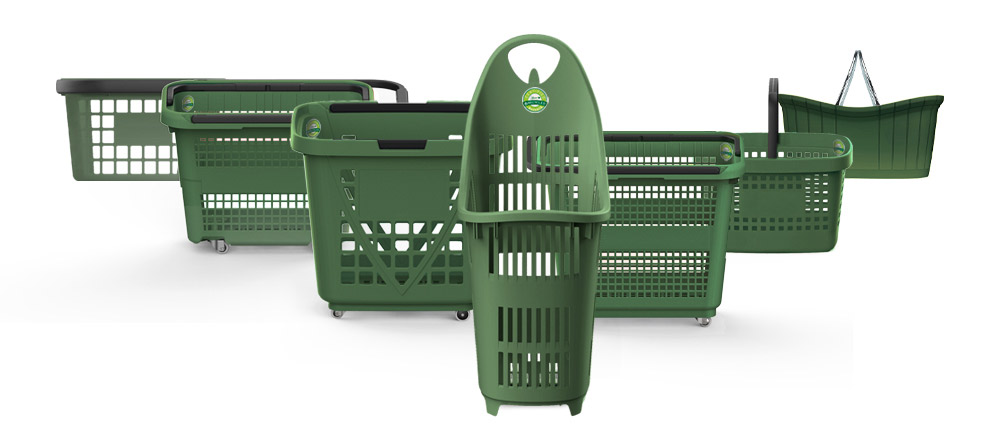
Store equipment is part of sustainability because it is present in the customer’s daily experience and can be made with recycled, durable or recyclable materials. Baskets, carts and furniture are not neutral elements: they also communicate brand values.
Offering recycled baskets and carts helps position the point of sale as a more environmentally responsible space. Although many retail operations cannot completely avoid plastic, they can choose solutions made with high percentages of recycled plastic.
Recycled baskets
They bring sustainability into a highly visible item used by almost every customer in the store.
Durable products
Durability reduces replacement frequency and prevents equipment from becoming waste too soon.
Visible communication
A clear label or message helps customers understand that they are using recycled retail equipment.
Traceable supplier
A supplier with certifications and verifiable processes brings more credibility than a generic claim.
How should sustainability be communicated to customers?
Sustainability must be communicated clearly, visibly and honestly inside the point of sale. If the brand makes an environmental effort, the customer needs to understand it without having to search for hidden information.
Shopping Basket recycled baskets include an adhesive label that communicates that they are recycled retail equipment. This type of message helps turn a professional purchasing decision into a visible signal for the final consumer.
A sustainable action that customers do not understand loses part of its value; a well-communicated sustainable action strengthens trust, brand recall and consistency.
How can reusable campaigns reduce waste?
Designing reusable campaigns helps reduce waste in visual merchandising and makes better use of promotional materials. For recurring campaigns, retailers should create reusable fixed parts and mobile pieces that can change by season or promotion.
Much of retail signage is made from PVC and is not always recycled correctly. Choosing durable, recyclable or responsibly sourced materials can improve the environmental impact of in-store communication.
Materials for sustainable retail campaigns
Material selection should respond to the intended use, required durability, installation environment and real potential for reuse or recycling.
| Material | Recommended use | Sustainable advantage |
|---|---|---|
| Wood | Large outdoor signs, monoliths, window displays, indoor panels, letters and logos. | It is durable and can provide a natural look in reusable campaigns. |
| Bamboo | Indoor or outdoor signage, lightweight structures and moldable elements. | It grows quickly, regrows after being cut and can work as an alternative to plastic. |
| Aluminum | Projecting signs, light boxes, structures and pieces that require strength with low weight. | It can be recycled repeatedly without losing its properties. |
| Polypropylene | Display boards, billboards and lightweight waterproof supports. | It is durable, lightweight and easier to recycle than other plastics such as PET or PVC. |
| Paper and cardboard | Indoor signage, temporary campaigns and lightweight materials. | They are widely recycled materials; retailers should choose options with FSC certification. |

How can sustainability be integrated into visual merchandising?
Visual merchandising can communicate a brand’s environmental commitment directly and clearly. The key is to highlight sustainable products, explain real initiatives and involve customers in the experience.
A store can use differentiating labels, colors associated with recycling, specific signage for eco-friendly product categories and posters explaining the brand’s environmental actions. This communication should be concrete to avoid generic or low-credibility messages.
- Highlight sustainable products: use labels, colors or clear signage to identify more responsible categories.
- Communicate environmental initiatives: explain waste reduction, recycling, energy savings or certified suppliers.
- Involve customers: organize workshops, activities or experiences that connect sustainability and brand.
How can a store become more compatible with social media?
A sustainable store can also be designed to generate shareable content from customers themselves. User-generated content can amplify the environmental message when the point of sale offers clear, original and easy-to-photograph visual elements.
Many people share sustainable lifestyles on social media. That is why a brand can include social media handles, hashtags, eye-catching visual spaces and human messages that invite participation.
| Social element | How to apply it in-store | Expected result |
|---|---|---|
| Hashtags | Include them in signage, campaign areas or visual merchandising materials. | Makes customer-generated content easier to find. |
| Social media handles | Show the official brand account in visible but non-invasive spaces. | Connects the physical experience with the brand’s digital community. |
| Original displays | Create visual points that are different, consistent with sustainability and easy to photograph. | Increases the likelihood that customers share the experience. |
| Humor and proximity | Use human, brief and memorable messages when they fit the brand. | Makes sustainability feel more accessible and less corporate. |
Why choose suppliers committed to the environment?
Choosing suppliers committed to the environment helps reduce the impact of the value chain and strengthens brand credibility. Point-of-sale sustainability also depends on how the products used in-store are manufactured, transported and certified.
Selecting local or nearby suppliers can reduce the impact linked to transport. In addition, requiring official certifications makes it possible to verify that environmental claims are supported by auditable processes rather than only commercial messages.
Shopping Basket uses the European Eucerplast accreditation, an external agent that verifies post-consumer recycled plastic. According to the original content, this accreditation checks that 95% post-consumer recycled plastic comes from plastics recovered from yellow street containers.

Sustainability gains credibility when it can be verified through traceable suppliers, certified materials and clear messages for consumers.
Which actions should retailers prioritize for a more sustainable store?
A more sustainable store should prioritize visible, measurable actions that are consistent with its operations. Not all measures have the same impact, so it is useful to organize decisions by implementation effort and customer value.
| Priority | Recommended action | Why it creates value |
|---|---|---|
| High | Review store equipment, such as recycled baskets and carts. | It is visible to customers and directly part of the shopping experience. |
| High | Communicate sustainable initiatives inside the point of sale. | Helps customers understand what the brand is doing and why it matters. |
| Medium | Design reusable campaigns and reduce single-use materials. | Reduces waste and improves the efficiency of recurring campaigns. |
| Medium | Choose suppliers with environmental certifications or traceable materials. | Strengthens credibility and reduces the risk of unverifiable claims. |
| Progressive | Redesign lighting, water, energy and store architecture. | Can create structural improvements in consumption and brand perception. |
Frequently asked questions
How can a store become more sustainable?
A store can become more sustainable by reducing waste, using efficient lighting, communicating environmental initiatives, reusing campaign materials, choosing responsible suppliers and using retail equipment made with recycled or recyclable materials.
Why do recycled baskets support sustainability in retail?
Recycled baskets help because they incorporate recovered material into a daily-use item that is highly visible to customers. They also make it possible to communicate the store’s environmental commitment without relying only on advertising messages.
Which materials are better for reusable campaigns?
It depends on the use. Wood, bamboo, aluminum, polypropylene, paper and cardboard can be useful options when selected according to durability, recyclability, installation environment and real potential for reuse.
How can retailers communicate sustainability without losing credibility?
Communication should be concrete, visible and verifiable. It is better to explain real actions, materials used, certifications, waste reduction or responsible suppliers than to use generic messages about environmental commitment.
Why does choosing sustainable suppliers matter?
Suppliers influence the environmental footprint of the point of sale. Choosing nearby suppliers with certifications and traceable materials helps reduce risks, improve credibility and align the value chain with sustainability goals.
Which certification does Shopping Basket mention for recycled plastic?
The article mentions the European Eucerplast accreditation, which acts as an external agent to verify post-consumer recycled plastic. This type of certification helps strengthen the credibility of recycled materials used in retail equipment.