Shopping baskets for high-traffic stores and their real impact on retail operations
How useful capacity, durability, stacking and manoeuvrability affect customer flow, daily efficiency and the shopping experience.
Shopping baskets for high-traffic stores must combine durability, useful capacity and manoeuvrability to perform well with hundreds of customers every day. SB Shopping Basket manufactures hand baskets, rolling baskets and shopping carts in Spain with monobloc construction, silent polyurethane wheels with double ball bearings and capacities ranging from 10 to 91 litres. Solutions for supermarkets, hypermarkets, discount stores, clothing and FMCG retail in more than 70 countries under ISO 9001 and ISO 28000 certification.
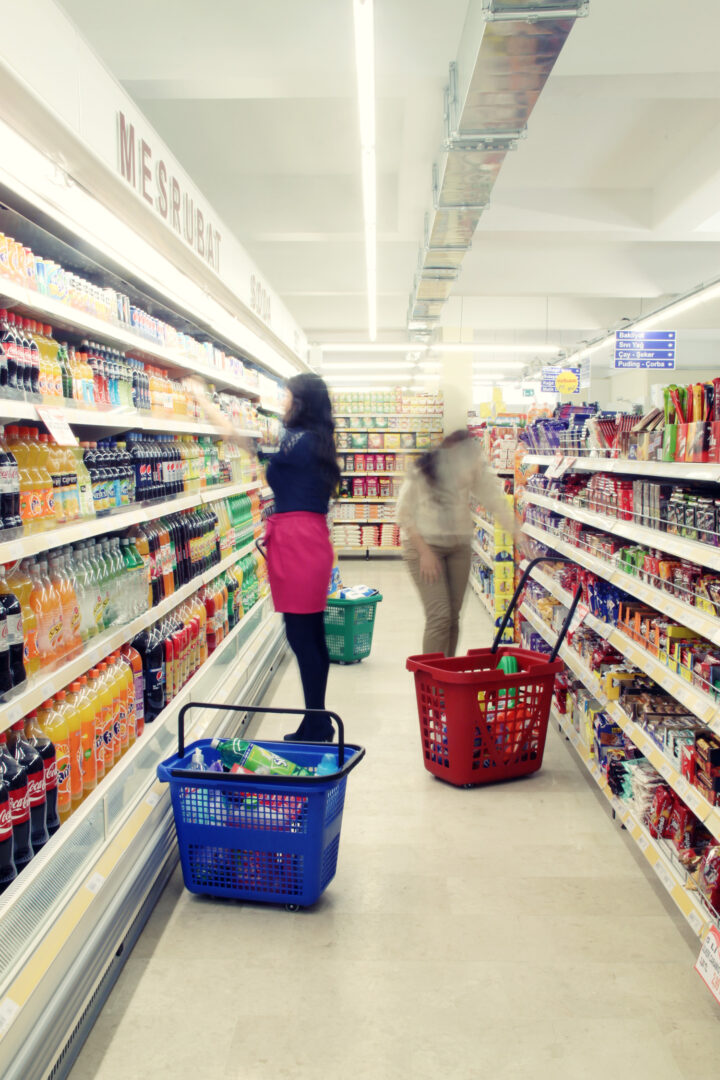
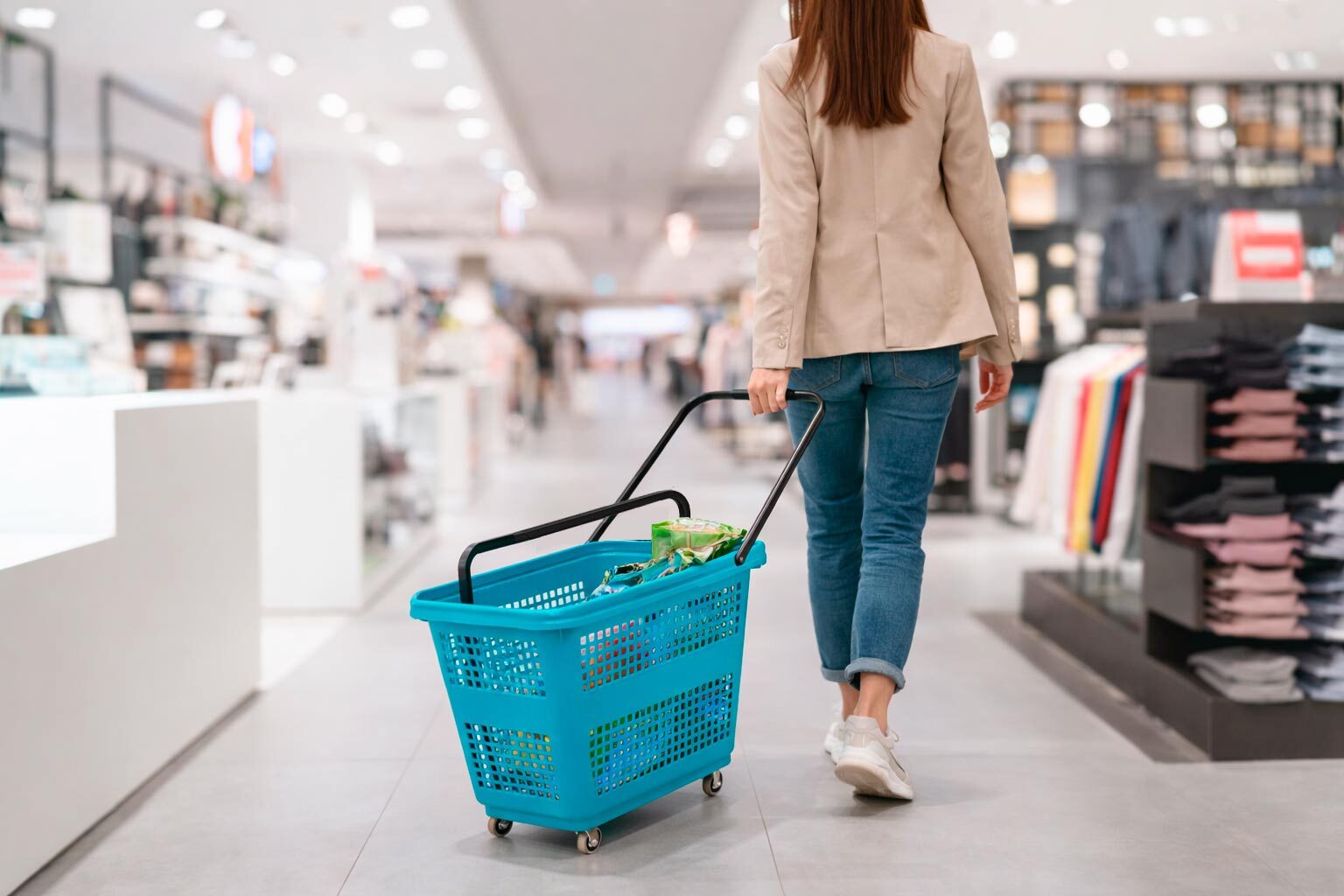
Shopping baskets for high-traffic stores are a key operational tool in large chains, supermarkets, hypermarkets and stores with high customer turnover. Their impact doesn’t depend solely on the litres they advertise — it depends on how well they help shoppers move, carry products and reach the checkout without friction. In retail operations with hundreds of daily purchases, a poorly chosen basket can cause disorder, aisle blockages, more restocking and a greater workload for store staff. This article explains the criteria a retail chain should analyse when choosing durable, comfortable and efficient baskets.
A basket stops being an accessory the moment it affects customer flow, shopping comfort and the daily efficiency of the store.

Why are baskets for high-traffic stores a strategic decision?
Baskets for high-traffic stores are a strategic decision because they are used constantly and affect thousands of shopping journeys. In a high-volume retail environment, a small design flaw can become a daily inefficiency when it repeats across many stores.
The design of a basket directly influences customer comfort, journey flow, real load capacity, entrance organisation, restocking time and the service life of the equipment.
Customer comfort
A comfortable basket reduces friction during the purchase and allows the customer to continue through the store with less effort.
In-store flow
A well-sized basket helps keep aisles flowing and reduces blockages in high-circulation areas.
Staff efficiency
Baskets that are easy to stack and reposition reduce repetitive tasks at entrances, checkouts and collection areas.
Equipment lifespan
A durable basket reduces incidents, restocking needs and costs associated with operational wear.
What hidden costs does a poor basket choice cause?
A poor basket choice creates hidden costs because it increases breakages, complicates stacking, worsens circulation and limits useful purchase capacity. These problems don’t always appear in the initial price, but they do affect daily operations.
In large chains, hidden costs multiply with the number of stores, the volume of customers and the frequency of equipment use.
| Problem | Operational impact | In-store consequence |
|---|---|---|
| Frequent breakages | More replacements and higher costs. | The chain needs to restock equipment more frequently. |
| Poor stacking | Disorder at entrances and lost time. | Staff spend more effort keeping the entrance organised. |
| Low manoeuvrability | Blockages and worse circulation. | The customer journey becomes less comfortable and less fluid. |
| Low useful capacity | Fewer products per purchase. | The basket can become a physical limit for the customer. |
The real cost of a basket isn’t measured by its unit price alone, but by its durability, ease of use and the daily operational time it demands.
Why does useful capacity matter more than litres?
Useful capacity matters more than litres because two baskets with the same theoretical capacity can behave very differently in real use. What matters to the shopper is how much product they can place comfortably, stably and naturally.
The difference usually lies in the interior geometry, the stable base, straight walls and weight distribution. A basket may advertise good capacity but lose utility if it fills up visually too quickly or doesn’t allow products to be organised well.
- Straight walls that make better use of interior space.
- A stable base for products of different sizes.
- Interior geometry that avoids loss of useful volume.
- Weight distribution that improves comfort during the journey.
Better useful capacity can help customers complete a larger purchase before reaching the checkout, without feeling the basket is overfull or uncomfortable.
How does aisle flow affect the shopping experience?
Aisle flow affects the shopping experience because it determines how easily customers move, pass each other and access products. When a basket is too wide or difficult to manoeuvre, the journey becomes slower and less comfortable.
In high-traffic stores, circulation is part of the sale. If customers encounter friction in aisles, promotional areas or checkout access, their experience deteriorates and the store loses operational efficiency.
Compact baskets
Help improve circulation in narrow aisles and high-density customer areas.
Manoeuvrable baskets
Make turns, direction changes and natural movements during shopping easier.
Stable baskets
Reduce uncomfortable movements and improve the shopper’s sense of control.
Well-stacked baskets
Keep store entrances more orderly and reduce interruptions at the door.
Improving circulation doesn’t always require redesigning the store, changing the type of basket can reduce visible friction in the customer journey.
Common problems in high-traffic stores and how SB Shopping Basket solves them
Specific solutions from the SB catalogue for the most common issues in high-footfall retail operations.
| In-store problem | Operational impact | SB solution |
|---|---|---|
| Narrow aisles with high traffic | Blockages, friction between customers, worse experience | Bond 70L and Superbond 91L, maximum capacity in a minimal footprint. Two units fit side by side in a standard aisle. |
| Noisy wheels in store | Poor sound experience, complaints, noisy store feel | Polyurethane wheels with double ball bearings across the full rolling range, 30% less noise than standard wheels |
| Baskets that break under intensive use | Urgent restocking, unplanned cost, deteriorated image | Monobloc construction across all SB models, no weak joints. 2-year warranty. |
| Insufficient capacity for large purchases | Customer reaches checkout before completing their shop, lower average basket value | Barcelona 54L, XXL 80L, Match 86L — from 54 to 86 L for medium and large purchases |
| Customer fatigue on long journeys | Less time in store, shorter purchase | Fit 26L with ergonomic curve, 47% less effort. Rolling baskets for medium and large purchases. |
| Instability on ramps and escalators | Accident risk, incidents, complaints | Bond 70L and Superbond 91L with optional brake system, safe on slopes up to 10% |
| Disorder at entrances and access areas | Poor first impression, staff time spent reorganising | Efficient stacking system across the full range, up to 30 baskets per 1.20 m depending on model |
| Irregular supply across stores | Different basket fleets per store, inconsistent brand image across the chain | Manufacturing in Spain under ISO 9001, planned supply for chains in more than 70 countries |
Why is basket durability real operational savings?
Basket durability is real operational savings because it reduces breakages, restocking, visual wear and the time spent managing incidents. In high-traffic retail, a durable basket protects the continuity of daily operations.
Purchase price only accounts for part of the cost. Also important are service life, restocking frequency, how the equipment looks over time and the workload it places on store staff.
A durable basket cuts costs because it avoids unnecessary replacements and keeps the store looking more organised for longer.
Monobloc designs and higher-quality materials tend to reduce incidents and extend durability over years, as long as they are suited to the actual level of use in the store.
How to evaluate baskets for high-traffic stores?
To evaluate baskets for high-traffic stores, a chain should analyse real in-store performance, ease of use, useful capacity, aisle flow, structural durability, stacking ease and adaptation to the retail format. The best choice combines customer experience and operational efficiency.
A professional evaluation should not be limited to comparing litres or unit prices. The basket must work well in supermarkets, convenience stores, hypermarkets or specialist formats depending on the type of purchase, available space and intensity of use.
| Criterion | What to analyse | Why it matters |
|---|---|---|
| Useful capacity | Real usable space and ease of placing products. | Prevents the basket from limiting the purchase before reaching the checkout. |
| Manoeuvrability | Performance in aisles, turns and high-traffic areas. | Improves customer flow and reduces in-store friction. |
| Durability | Resistance to intensive use, impacts and visual wear. | Reduces restocking and protects the image of the point of sale. |
| Stacking | Order, stability and speed of repositioning. | Makes staff work easier and keeps entrances tidy. |
| Format adaptability | Relationship between basket, layout, product and customer profile. | Avoids using a one-size-fits-all solution in stores with different needs. |
What conclusion should retail chains draw?
Retail chains must understand that baskets for high-traffic stores have a direct impact on operational efficiency, in-store circulation and real purchase capacity. A well-chosen basket improves the customer experience and reduces internal friction.
When the analysis focuses on useful capacity, durability and manoeuvrability, the basket stops being a simple container and becomes an operational improvement tool for supermarkets, large chains and high-footfall stores.
Choosing the right shopping baskets allows retailers to improve store operations without changing their range, layout or commercial strategy.
Frequently asked questions
What should a large chain prioritise when choosing shopping baskets?
A large chain should prioritise durability, useful capacity, manoeuvrability and ease of stacking. These criteria affect customer comfort, aisle flow, entrance organisation and staff workload. In high-traffic stores, the basket must withstand intensive use and maintain a smooth shopping experience.
Can a basket influence sales?
Yes, a basket can influence sales because it affects ease of use and real purchase capacity. If a basket is uncomfortable, fills up too quickly or makes the journey more difficult, customers may limit their purchase. A well-designed basket removes friction and helps shoppers complete their journey more fully.
Is it advisable to use the same basket across all store formats?
It isn’t always advisable to use the same basket in every format. A supermarket, a convenience store, a hypermarket and a specialist retailer may have different needs in terms of capacity, mobility and stacking. The basket should adapt to the layout, product type and typical customer behaviour.
Why is stacking important in high-traffic stores?
Stacking is important because it affects entrance order, restocking speed and the team’s daily workload. Baskets that stack poorly create disorder, take up more space and require staff to intervene more frequently. Good stacking improves equipment availability and the image of the store.
What is the difference between theoretical capacity and useful capacity?
Theoretical capacity refers to the declared litres of a basket, while useful capacity reflects how much product a customer can comfortably and stably carry. Interior geometry, the base, walls and weight distribution can make two baskets with similar litres perform very differently in store.
When is it worth reviewing a retail chain’s basket fleet?
It’s worth reviewing the basket fleet when frequent breakages, entrance disorder, customer complaints, manoeuvring difficulties or constant restocking appear. It’s also advisable when opening new store formats, modifying layouts or detecting that the current basket is limiting shopping comfort and operational efficiency.
SB Shopping Basket manufactures shopping baskets and carts in Spain for retailers in more than 70 countries. Range from 10 to 91 litres, monobloc construction, polyurethane wheels with double ball bearings and planned supply under ISO 9001 and ISO 28000.
→ How to choose a shopping basket
→ View the full SB product range
→ Retail store optimisation
→ Shopping basket and cart manufacturers in Europe