360° sustainability in retail: from packaging to store furniture
How supermarkets, convenience stores and perfumeries can align packaging, furniture, baskets and carts with a coherent environmental strategy.
360° sustainability in retail means applying environmental criteria consistently across every store touchpoint: packaging, furniture, lighting, baskets, carts, internal processes and communication. For supermarkets and retailers, reducing plastic bags or using recyclable packaging is not enough if the rest of the point of sale does not support the same vision. A well-integrated sustainable strategy strengthens customer trust, improves brand perception and supports better long-term purchasing decisions.

We are living in a moment when consumers are more demanding than ever. Offering good prices or a smooth shopping experience is no longer enough. Today, people want to know what lies behind each product, how it was made and what impact it has on the planet.
Sustainability in retail has become an essential pillar. It is not only about reducing plastic bags, but about applying a global approach where every element, from packaging to store furniture, communicates consistency, commitment and environmental responsibility.
In this article, we explore how 360° sustainability is transforming supermarkets, convenience stores and perfumeries, and how solutions such as Shopping Basket’s eco-sustainable baskets and carts can strengthen customer perception and reduce the environmental impact of the business.
Sustainability in retail does not work as an isolated action. It works when every decision inside the store communicates the same commitment.
What does 360° sustainability mean in retail?
When we talk about sustainability in retail, we are not talking about isolated actions, but about a global strategy. It is a commitment that covers every stage of the value chain and every element that forms part of the shopping experience.
Production
It involves using recycled, recyclable or lower-impact raw materials whenever possible.
Distribution
It aims to reduce the carbon footprint associated with transport, logistics and unnecessary movement.
Shopping experience
It includes sustainable furniture, baskets, carts and store tools that reinforce a coherent brand image.
Communication
It requires transparency, clear data and responsible messages that go beyond generic promises.
360° sustainability means that every detail matters. And customers notice it. A brand that takes care of its product packaging but neglects store furniture communicates inconsistency. By contrast, a retailer that applies sustainability at every touchpoint builds trust and loyalty.
Sustainable packaging: the first customer touchpoint
Packaging is much more than physical protection for the product. It is the first interaction a customer has with the brand. At that moment, factors such as perceived quality, transparency and environmental commitment come into play.
Sustainable packaging is gaining importance in Spanish retail because it allows brands to communicate responsibility from the first contact with the product.
Key elements of sustainable packaging
- Packaging made from recycled and recyclable materials.
- Minimalist designs that reduce the use of ink and unnecessary plastics.
- Return or buy-back systems for reusable packaging.
- Clear labelling about material origin and recycling options.
Consumers value these actions and may choose one brand over another if they feel there is a real commitment to the planet.
Sustainable packaging opens the conversation with the customer, but the store must confirm that commitment in every detail of the journey.
Eco-friendly furniture: sustainability throughout the store journey
Packaging is the first impression, but the journey through the store confirms whether a brand truly lives sustainability in retail. Furniture, lighting and even the carts and baskets customers use to move around all form part of the experience.
A supermarket that uses recycled modular shelving, signage made from eco-friendly materials or low-energy furniture sends a clear message: sustainability here is not a slogan, it is a daily practice.
Eco-friendly furniture does not only have a positive impact on the environment. It also improves customer perception. A space designed with sustainable criteria feels more modern, pleasant and aligned with today’s consumer expectations.
| Store element | What it communicates to the customer | Impact for the retailer |
|---|---|---|
| Sustainable packaging | Environmental commitment from the first contact with the product. | Improves brand perception and supports the purchase decision. |
| Eco-friendly furniture | Visual and environmental consistency throughout the store journey. | Builds a more responsible and differentiated experience. |
| Recycled baskets and carts | Tangible sustainability in an element the customer uses throughout the entire purchase. | Reinforces the environmental message and improves the operational experience. |
Recycled baskets and carts: small details, big impact
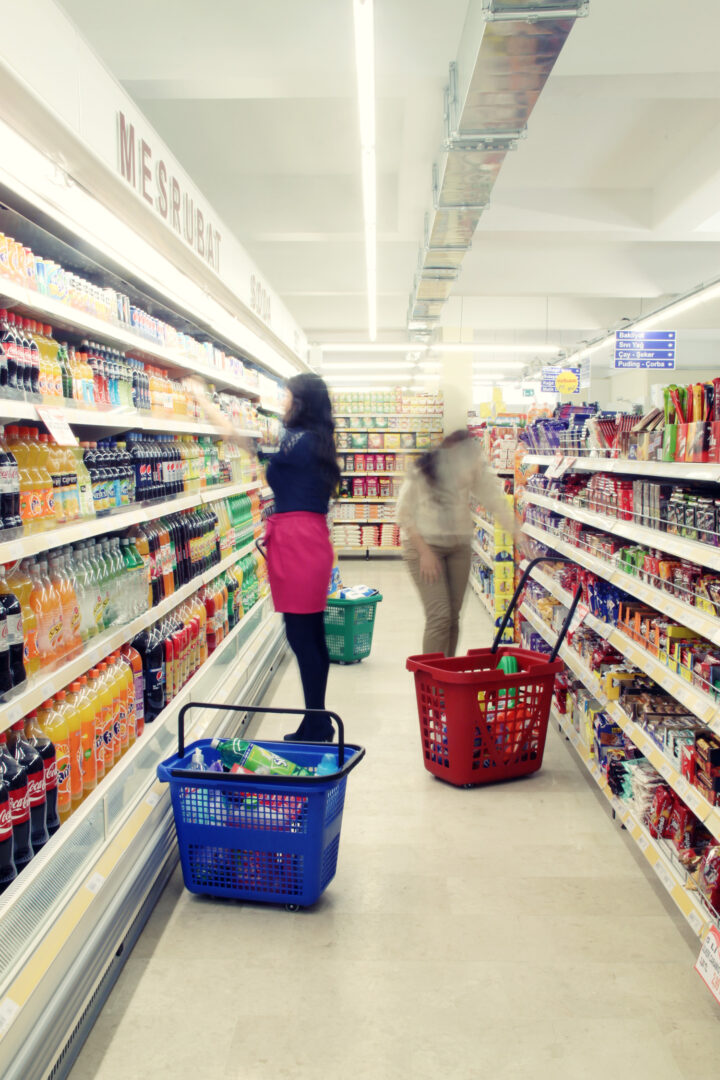
If there is one element that accompanies the customer throughout the entire purchase, it is the basket or the cart. It may seem like a minor detail, but it is actually a unique opportunity to reinforce the commitment to sustainability.
At Shopping Basket, we know this well. That is why we offer solutions designed to combine environmental responsibility, ease of use and resistance in store.
What eco-sustainable baskets and carts provide
- Carts and baskets made from recycled and recyclable materials.
- Ergonomic designs that make the customer experience more comfortable.
- High resistance, which translates into a longer service life and lower resource consumption.
- Versatile and lightweight models adapted to supermarkets, convenience stores and perfumeries.
When a customer uses an eco-sustainable basket, sustainability stops being an abstract message and becomes a tangible experience inside the store.
This type of solution allows customers to perceive that their purchase has a positive impact beyond the immediate moment. It is a simple and visible way to make them part of a more responsible retail model.
Data and trends: what consumers expect today
Sustainability in retail is not a sector trend without substance. It is a real demand from customers. Today’s consumer looks for concrete and visible actions, not just good intentions.
Greater willingness to pay
According to Nielsen, 74% of shoppers are willing to pay more for products from sustainable brands.
Preference for responsible retailers
In Spain, 8 out of 10 millennials say they prefer to buy from retailers with clear environmental policies.
Consistency across the whole store
70% of consumers value packaging, furniture and internal processes being aligned with sustainability.
Visible actions
Customers are no longer satisfied with general statements. They want to see concrete decisions during the shopping experience.
These figures reflect a clear trend: sustainability must be demonstrated through real, visible and coherent decisions at the point of sale.
Sustainability as a retail standard
Sustainability in retail is no longer an added value; it has become a standard. Brands that do not adapt risk falling behind, while those that embrace 360° sustainability strengthen their reputation, build customer loyalty and generate a positive impact on the planet.
At Shopping Basket, we believe sustainability starts with details: a lighter basket, a cart made from recycled materials or furniture that is consistent with the brand’s environmental values. Every detail contributes to building more conscious retail.
The next time a customer enters your store, every step they take and every object they use can reinforce one message: sustainability here is not a trend, it is a way of understanding the business.
Frequently asked questions
What does 360° sustainability mean in retail?
It means applying sustainable criteria across the entire store experience: production, logistics, packaging, furniture, baskets, carts, internal processes and communication. The goal is for every touchpoint to communicate a coherent environmental strategy.
Why is sustainable packaging important for a retailer?
Because it is one of the first contacts between the customer and the brand. Recycled, recyclable or reusable packaging can strengthen the perception of environmental commitment and improve consumer trust.
What role do baskets and carts play in store sustainability?
Baskets and carts accompany the customer throughout the entire purchase. If they are made from recycled materials, are durable and easy to use, they reinforce sustainability in a visible and practical way inside the point of sale.
Does in-store sustainability affect the customer experience?
Yes. A coherent space, with packaging, furniture and equipment aligned with the brand’s environmental strategy, can improve customer perception and strengthen trust in the retailer.
Why is durability also part of sustainability?
Because a more durable product reduces frequent replacements, waste and resource consumption. In retail equipment, service life is a key part of environmental impact and total cost of use.