Retail store equipment: from necessary expense to strategic advantage
How shopping baskets, rolling baskets and carts affect customer experience, team efficiency and the real cost of running a store.
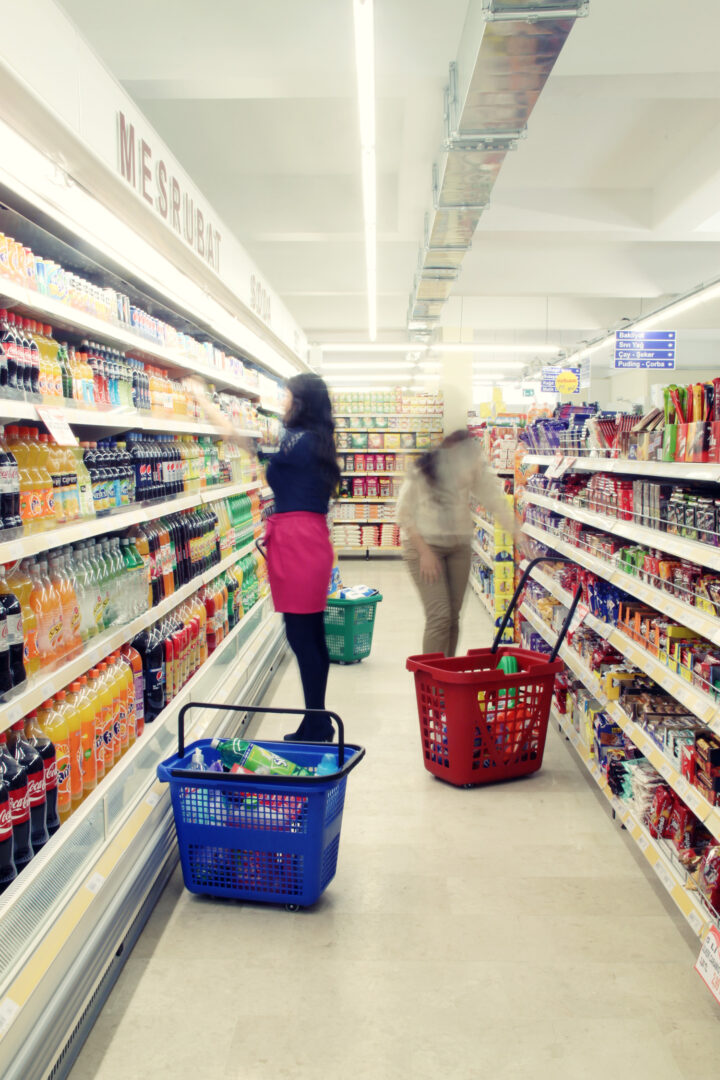
Retail store equipment — hand baskets, rolling baskets and shopping carts — has a direct impact on the shopping experience, operational efficiency and total cost of the point of sale. In retail, these products do more than solve a practical need: they also affect customer flow, team workload, storage, cleaning and restocking. Choosing retail equipment on price alone tends to generate more friction and higher costs in the medium term. Treating baskets and carts as operational assets makes it possible to improve shopper comfort, reduce internal workload and build a more functional, durable store ready for daily use.
 SB Shopping Basket manufactures shopping baskets, rolling baskets and carts in Spain under ISO 9001 certification, with features including silent polyurethane wheels with double ball bearings, monobloc construction and planned supply for retail chains in more than 70 countries.
Store equipment stops being a minor expense the moment it consistently affects the shopping experience, in-store flow and the team’s operational workload.
Why does retail store equipment already affect business performance?
Retail store equipment affects business performance because it shapes circulation, shopping comfort, team efficiency and the operational cost of the point of sale. Baskets, carts and other supporting elements have a daily impact on both customers and staff. In today’s retail environment, every physical element plays a role in the experience and the operation. Shopping baskets and carts can make the journey easier, improve product transport and support a smoother purchase — but they can equally create friction if they don’t fit the layout, the volume of use or the type of store.Shopping experience
A comfortable basket or a stable cart makes the journey easier, reduces effort and helps customers move through the store with less friction.Team efficiency
Well-adapted retail equipment reduces unnecessary movement and simplifies tasks like restocking, tidying, cleaning and collection.Customer flow
Rolling baskets and carts suited to the layout help keep aisles flowing and passage areas more comfortable for shoppers.Total cost of use
Durability, maintenance and restocking frequency affect the real cost of equipment far beyond the initial purchase price.Why doesn’t price reflect the real cost of retail equipment?
Price doesn’t reflect the real cost of retail equipment because the initial purchase value doesn’t capture how the product performs over its lifetime. Profitability also depends on durability, replacement frequency, maintenance and operational fit. Confusing unit price with savings is one of the most common mistakes in store equipment purchasing. A cheaper product can end up costing more if it breaks sooner, requires more replacements or complicates everyday tasks in store.- Durability and resistance to daily use.
- Restocking frequency.
- Ease of cleaning and maintenance.
- Logistics and storage efficiency.
- Adaptability to different store formats.
- Impact on customer experience and team operations.
The total cost of ownership of store equipment includes time, wear, replacement and the friction the product generates or prevents within the retail operation.
How do carts and baskets affect the shopping experience?
Carts and baskets affect the shopping experience because they influence comfort, mobility, perceived effort and the ease of continuing to add products. They are points of continuous contact throughout the entire store visit. Comfortable, stable and easy-to-handle equipment improves the flow of the journey and reduces physical friction during the purchase. This supports a more comfortable experience for the shopper and helps the visit unfold with fewer interruptions.Shopping baskets and carts affect the customer experience because they directly influence comfort, in-store movement and the willingness to carry more products.
| Element | Impact on the customer | Impact on the store |
|---|---|---|
| Hand baskets | Support quick purchases and agile journeys through the store. | Require efficient stacking and good availability at store entrances. |
| Rolling baskets | Reduce effort during medium or longer shopping trips. | Help customer flow when well integrated into aisles and passage zones. |
| Shopping carts | Allow customers to carry larger volumes comfortably. | Influence circulation, collection, order and management during peak times. |
How does basic equipment affect in-store operational efficiency?
Basic equipment affects operational efficiency because it feeds into daily workflows. When it’s well designed, it reduces unnecessary steps, improves mobility and eases the coexistence of customers and operations. Today’s store doesn’t function solely as a sales space. It can also act as a collection point, returns area or logistics support for online orders. In that context, any friction caused by poorly adapted baskets, carts or solutions compounds quickly.Operational flow
Store equipment can speed up or slow down restocking, floor tidying and team mobility throughout the working day.In-store coexistence
Baskets and carts can improve or worsen the coexistence between the customer’s shopping journey and the operational tasks of store staff.Daily maintenance
A design that’s easy to clean and handle reduces time spent on maintenance and improves equipment availability throughout the day.Team mobility
When equipment fits real-world use, staff can move more freely through aisles, entrances and checkout zones.Common operational problems and how the right equipment solves them
These are the issues retailers report most often, and the solutions SB Shopping Basket offers for each one.
| Operational problem | In-store impact | SB solution |
|---|---|---|
| Baskets that break frequently | More restocking, higher cost, worse image | Monobloc construction — single-piece baskets that eliminate breakage points |
| Noisy wheels | Poor in-store experience, customer complaints | Polyurethane wheels with double ball bearings — 30% less noise |
| Narrow aisles | Less flow, bottlenecks | Vertical baskets Bond 70L and Superbond 91L — maximum capacity, minimal footprint |
| Low basket capacity | Lower average basket value | Baskets from 54L to 91L — Barcelona, XXL, Match, Bond, Superbond |
| Picking with disposable packaging | Higher recurring cost and more waste | ReBasket 18L — reusable basket for picking and click & collect, 10,000+ uses |
| Irregular basket restocking | Inconsistency across stores | European manufacturing with planned supply — ISO 9001, more than 70 countries |
| Customer fatigue on longer shopping trips | Less time in store, less purchase | Fit 26L basket with ergonomic curve — 47% less effort |
| Unstable baskets on ramps | Incidents, accident risk | Bond 70L and Superbond 91L with optional brake for slopes up to 10% |
What do strategic retailers analyse before choosing store equipment?
Strategic retailers analyse how equipment actually performs in store before making a decision. They don’t focus solely on the initial price — they look at how the product responds within the operation, the layout and the daily workload. When the purchase is approached with a broader view, the questions change. The criteria move beyond purely tactical considerations to assess performance, adaptability and product lifespan.- How does it perform in narrow aisles?
- What happens when it reaches maximum load?
- How does it hold up in high-turnover stores?
- Does it stack efficiently?
- Is it easy to clean and maintain?
- Does it adapt to different store formats?
- Can it keep up with future changes in operations?
Why are sustainability and durability increasingly linked in retail?
Sustainability and durability are increasingly linked in retail because equipment that lasts longer reduces frequent replacements, waste and unnecessary transport. The product’s service life is also part of the environmental impact of the operation. A cheap product that needs replacing frequently can generate more waste and more logistical pressure. By contrast, durable, recyclable or sustainably manufactured equipment helps reduce impact without compromising operational efficiency.The durability of store equipment is no longer just an economic question — it’s also a decision about operational and environmental consistency.
Why is choosing store equipment now a strategic decision?
Choosing store equipment is now a strategic decision because it affects the customer experience, team efficiency and the total cost of the operation. Its impact is continuous and cuts across several areas of the business. Treating hand baskets, rolling baskets, shopping carts and other supporting elements as operational assets makes it possible to design more functional, resilient stores that are ready for the demands of modern retail. The best decision isn’t simply the cheapest — it’s the one that combines performance, durability, operability and day-to-day usability.Frequently asked questions
Why should store equipment be evaluated beyond price?
Because the initial price doesn’t show the full impact of the product on retail operations. Store equipment also affects durability, restocking, maintenance, storage and the customer experience. When these factors are assessed together, the purchase becomes a more cost-effective decision, one that’s more aligned with how the point of sale actually works.What are the most common mistakes when choosing baskets and carts for a store?
One of the most frequent mistakes is choosing shopping baskets or carts purely on unit cost, without considering how they perform in narrow aisles, during peak footfall or under maximum load. The time required for cleaning, stacking difficulty and frequent restocking are also routinely underestimated when the equipment isn’t designed for intensive use.How do rolling baskets help improve the shopping experience?
Rolling baskets can improve the shopping experience because they reduce physical effort on longer journeys and make it easier to carry more products comfortably. When they fit the store layout well, they also support customer flow and smoother circulation — particularly in supermarkets, specialty stores and other formats with medium to large purchase missions.What criteria should a retail manager review before buying equipment?
A retail manager should review durability, manoeuvrability, ease of cleaning, stacking, adaptability to the store format and how the product performs in real usage scenarios. It’s also worth considering how that equipment affects the customer experience, the team’s workload and the store’s operational flexibility.What is the relationship between sustainability and retail equipment?
The relationship is direct: more durable retail equipment reduces the need for frequent replacements and, with that, decreases waste and unnecessary logistical movement. Sustainability doesn’t depend solely on the material — it also depends on the product’s service life and its ability to maintain good performance within the store’s daily operation.SB Shopping Basket manufactures hand baskets, rolling baskets and shopping carts in Spain for retailers in more than 70 countries. European manufacturing under ISO 9001 and ISO 28000, polyurethane wheels with double ball bearings, monobloc construction and planned supply for retail chains.
→ Retail store optimisation → View the full SB product range → How to choose a shopping basket → Shopping basket and cart manufacturers in Europe