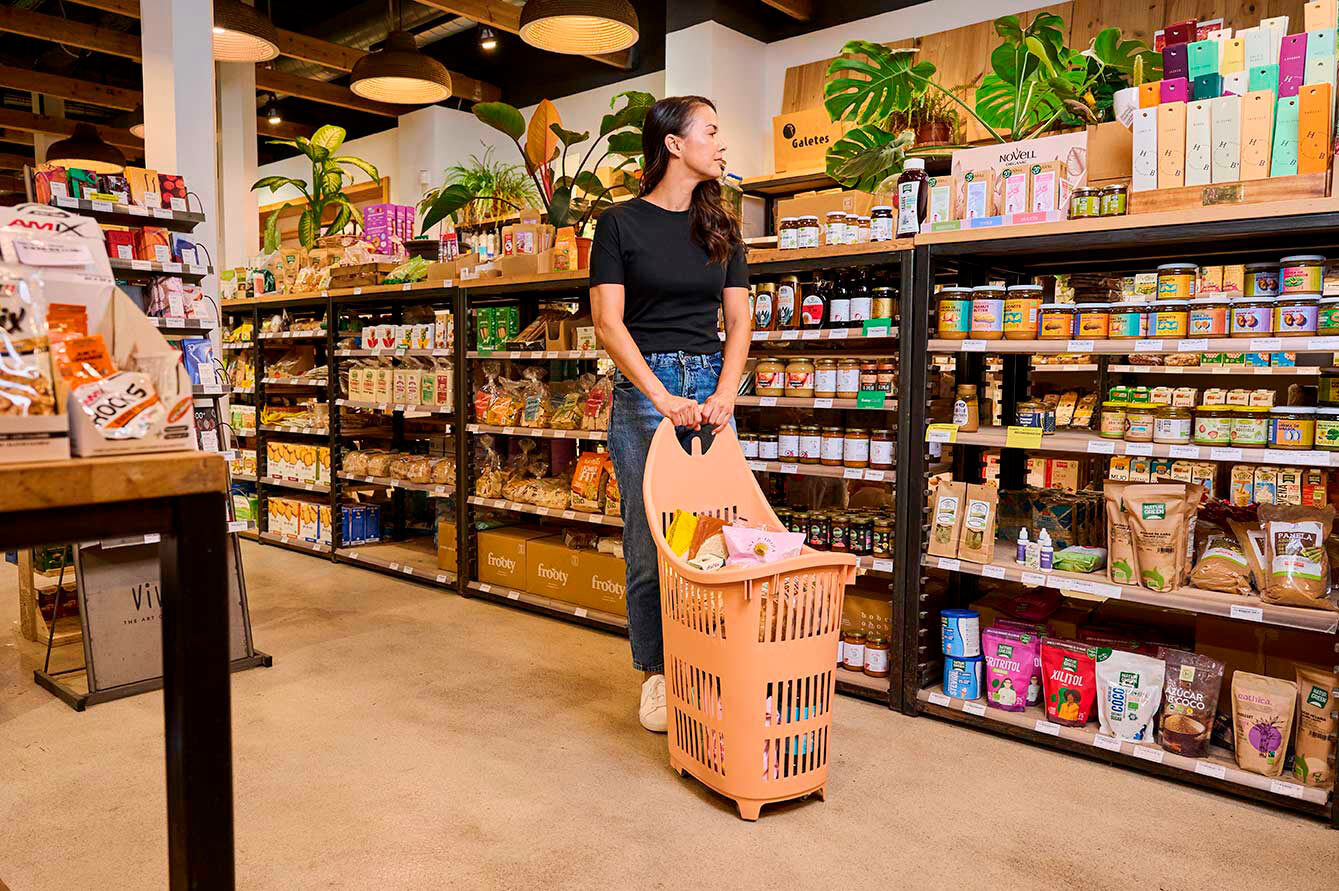
Baskets and trolleys accompany customers for much of their visit. When they work well, they tend to go unnoticed. When there are too few, or they are awkward to use or get in the way, the equipment becomes a source of friction that is worth pinpointing before you decide what to renew. This guide helps you assess the baskets and trolleys in your retail store.
Assessing baskets and trolleys starts with the customer journey
The experience starts when customers look for a basket or trolley and decide how to carry their purchases. It carries on throughout the visit. Your assessment should cover the whole journey.
- 1Looks for a basket or trolleyDecides how to carry
- 2Picks up itemsThe shop starts to grow
- 3Moves between displaysAisles and space
- 4Visits the fitting roomIf the store has one
- 5Reaches the tillAnd the equipment returns
A basket in good condition may still suit the range or the space badly. The opposite can also happen: the format is right, but there are no units available where they are needed. Each situation calls for a different response.
Assessing baskets and trolleys in store: six moments to check
Walk through the visit in this order and note what to check at each moment.
| Moment | What to check | Possible friction |
|---|---|---|
| 1. Entrance | Whether the equipment is visible and available. | Customers cannot find any equipment |
| 2. Selection | Whether there are options for different shopping missions, and whether customers understand how to use them. | The format does not suit the shop |
| 3. Journey | The comfort of the handles and how the wheels behave. | Too much effort, or poor manoeuvrability |
| 4. A growing shop | Whether products fit and can be carried without difficulty. | Capacity or ergonomics out of step |
| 5. Aisles, tills and fitting rooms | The turns and the real space available. | Hard to move around |
| 6. After payment | Where the equipment goes next. If baskets pile up at the till, availability may run short at the entrance even though the store has enough units overall. | Shortage caused by redistribution |
Test ergonomics with a representative shop
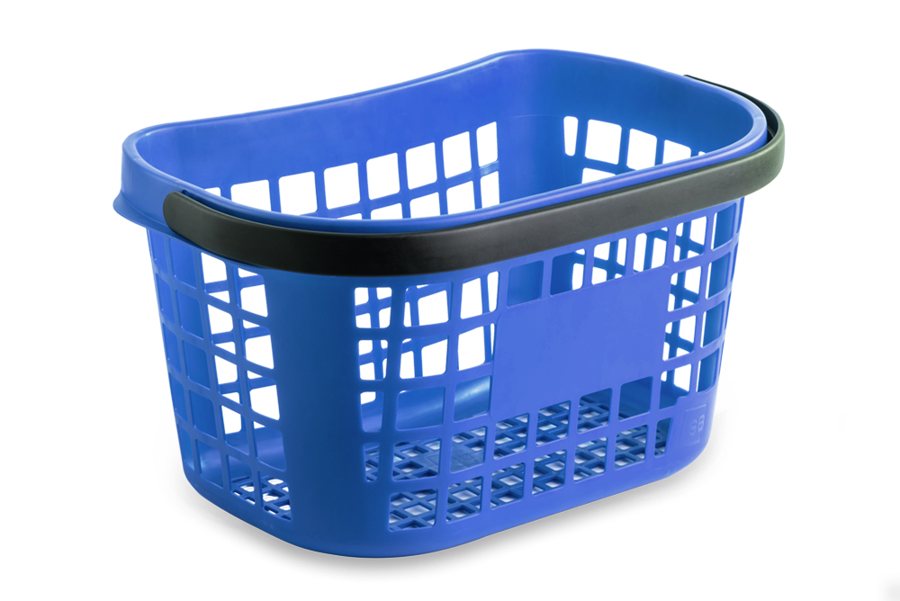
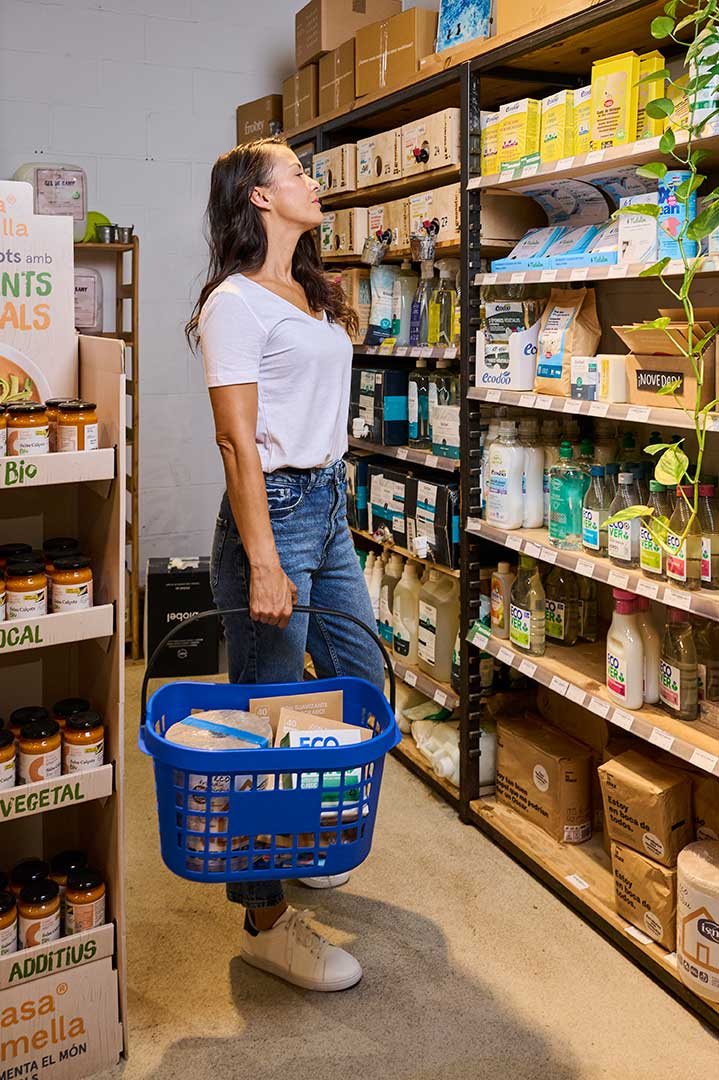
Assess the handle, the overall weight, stability and manoeuvrability. A test with an empty basket tells you little: add a selection of products that reflects typical shops and walk the areas where difficulties arise.
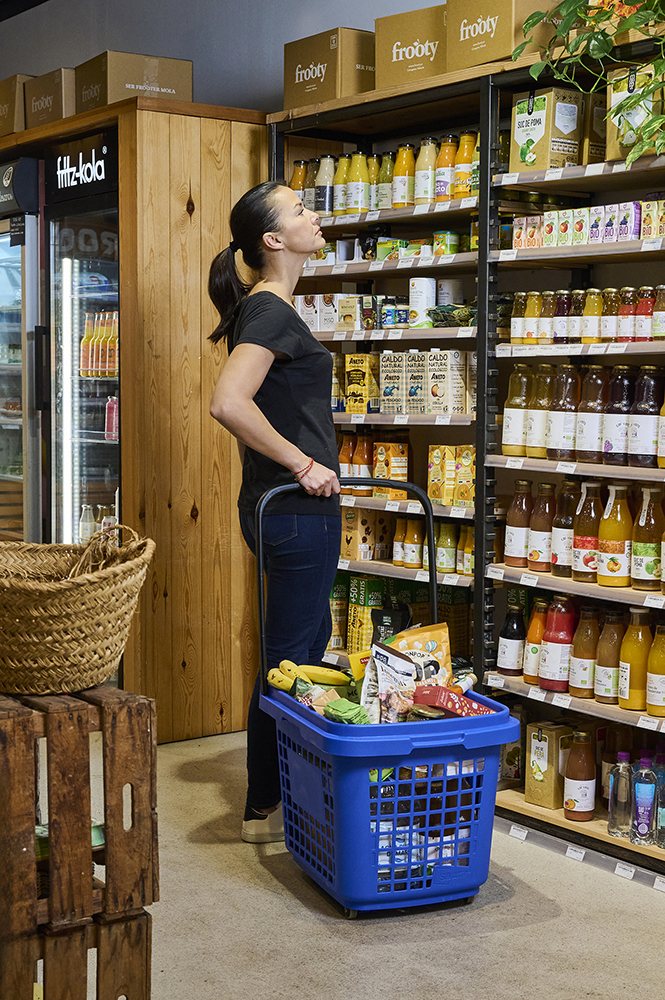
With hand baskets, watch whether the weight makes people switch hands, rest the basket on the floor or put it down before they have finished. With rolling baskets, check pulling away, turning and changing direction on the real floor. Record where the effort appears, without assuming that one format will be comfortable for every user.
Judge capacity against the products your store sells
A basket that is full before the visit ends, items piled above the rim or products carried in the hands can point to a capacity limit. Switching from a basket to a trolley is also worth watching, although on its own it does not prove a problem.
When capacity is the limit, offering customers a larger basket may help them carry more, and that may show up in units per transaction (UPT) and in average transaction value. The effect is not automatic: it depends on the volume, weight and shape of the products, on manoeuvrability and on the type of shop. Litres alone do not tell you whether a rigid box fits well, or whether a hand basket feels heavy before it is full.
How to check it in your store
- 1Compare the dataUPT and average transaction value before and after, in comparable stores or periods.
- 2Trial it in a pilot storeInstall the new capacity in one store and keep another as a reference.
- 3Watch real useNote whether customers use it for the shops that used to outgrow the old basket.
Space shapes how the solution is used
Check usable widths, turns, queuing areas, tills and fitting rooms. Allow for temporary displays and for use at peak times: the route available may differ from the one on the plan.
Also review the space set aside for stacking and for recovering units. The solution should let people move around and keep the equipment available without passing the problem on to store colleagues.
Condition and appearance of baskets and trolleys: assess them together
Look at wear, cleanliness, colour, consistency and how the wheels and handles work. Separate cosmetic damage from damage that affects use. If a wheel, a handle or the structure compromises normal or safe operation, prioritise inspection, withdrawal or replacement of that unit.
A visual difference between units may justify reviewing maintenance or the consistency of the fleet. It does not automatically mean that all the equipment needs renewing.
Changes to the range can leave an earlier solution out of step
New categories, bulkier products, shops with more items or a refit can change what is needed. Quick top-up shops and longer journeys can also coexist in the same store.
Compare your observations with purchase data and with store colleagues. Before deciding on a change, identify what has changed since installation and which situations are still being handled well.
Customer experience and operations should be assessed together
Follow the circuit: entrance, customer, till, recovery and back to the entrance. Identify who redistributes the units, when and how long it takes.
1 Customers pick up equipment at the entrance · 2 They move through the aisles and displays · 3 They pay at the till · 4 Units that build up return to the entrance. Illustrative diagram: the layout of each store will differ.
A one-off shortage may only need redistribution; a recurring shortage may call for a review of quantities, location or process.
Record incidents, units out of service and cleaning or maintenance tasks over a representative period. Link each problem to its place, time and frequency, so that you do not blame the product for friction that starts in operations.
Three questions to structure the diagnosis
- 1Where does the friction appear?Describe a specific point in the journey.
- 2Who does it affect?Separate customers from store colleagues and note how it shows.
- 3Is it one-off or recurring?Look for repeated observations in comparable conditions.
With that diagnosis you can decide what to measure: units per transaction, average transaction value, the volume and weight of products, journey time or availability. These figures help turn an impression into a defined equipment need.
Frequently asked questions
How do you assess baskets and trolleys in a retail store?
Observe real use across the whole customer journey: availability at the entrance, comfort of handles and wheels, capacity with a representative shop, turns in aisles and at tills, and the condition of each unit. Record incidents with their place, time and frequency.
Does one incident mean replacing the whole fleet?
Not necessarily. It may be solved by maintenance, withdrawing units, redistribution or partial renewal. The decision depends on the cause and on how often it recurs.
Does more capacity mean a better experience?
It depends on the product, the weight, the journey and the space. Capacity has to match real use.
Who should take part in the diagnosis?
Store teams and Operations contribute observations from daily use. Procurement and the teams responsible for the space help turn them into requirements.
Should you keep, review or plan a renewal?
Answer 12 questions about what you have observed in your store and find out what to review first.
Download the Diagnostic Test