Store traffic: how to improve customer flow in retail stores
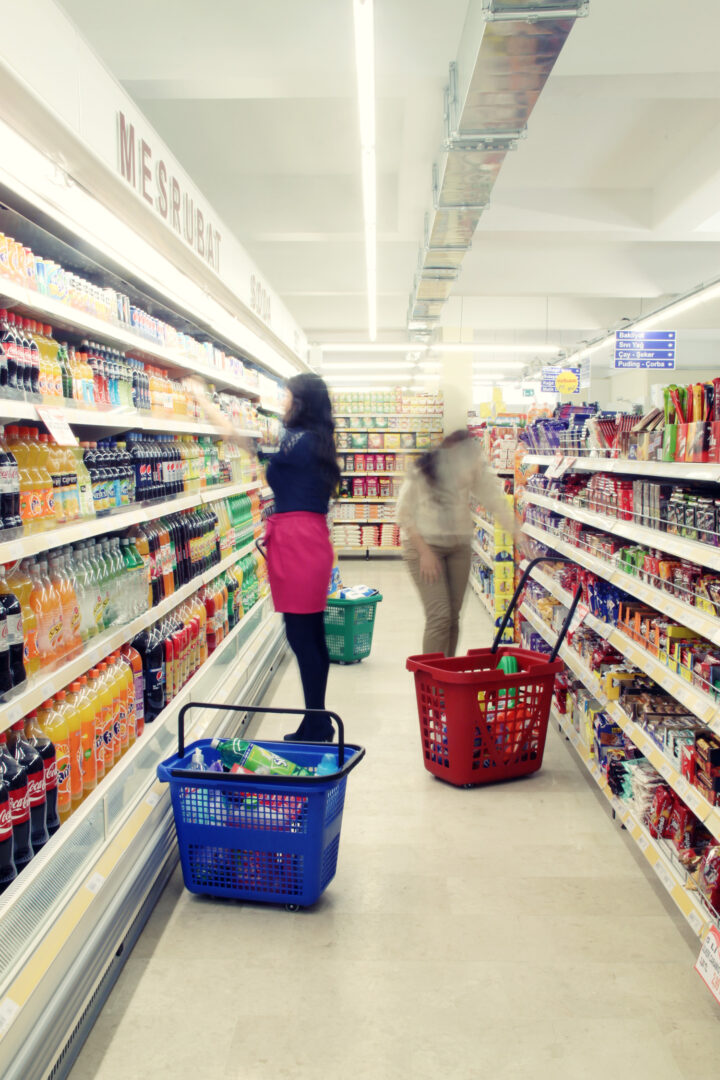
Store traffic tells you how many people enter your shop. Customer flow tells you what happens next: where shoppers move, where congestion appears and whether the store layout and equipment support the shopping journey.
Quick answer
Store traffic measures the number of people entering a retail store during a given period. But footfall alone does not show how efficiently the store works. Retailers also need to understand customer flow: how shoppers move through aisles, where congestion occurs, which areas receive less traffic and whether the layout, baskets and trolleys support the shopping journey.
High store traffic can be valuable, but simply bringing more people through the door does not automatically make a retail space more effective.
What happens once customers enter matters just as much. Do they move comfortably through the aisles? Are some areas consistently ignored? Do displays or equipment create bottlenecks? Can shoppers carry the amount they want to buy comfortably?
Analysing store traffic alongside customer flow helps retailers understand how the physical environment supports — or restricts — the shopping experience.
What is store traffic?
Store traffic, also known as retail footfall, refers to the number of people who enter a physical retail store during a particular period.
Retailers can compare traffic by hour, day, store or season to identify patterns in visitor numbers. However, entrance data becomes much more useful when it is combined with information about what customers do once they are inside.
This is where the distinction between store traffic and customer flow becomes important.
Store traffic vs customer flow: what is the difference?
| Metric | What it tells the retailer |
|---|---|
| Store traffic / footfall | How many people enter the store during a specific period. |
| Customer flow | How customers move through the retail space once they are inside. |
| Dwell time | How long shoppers remain in a particular area or within the store. |
| Conversion | How many visitors ultimately complete a purchase. |
| Congestion | Where customer movement becomes difficult or different flows interfere with each other. |
Footfall tells you how many customers arrive. Customer flow helps explain how effectively your store handles them once they are inside.
What can store traffic reveal about your retail space?
Analysing traffic is not only useful for understanding how many people visit a store. It can also help identify whether the physical environment is working as intended.
Low-traffic areas
Some sections may receive significantly less customer movement than expected, suggesting issues with visibility, layout or access.
Congestion points
Narrow passages, displays or equipment can create areas where shoppers slow down or block each other.
Shopping capacity
If customers do not have enough carrying capacity, the equipment itself may become a limitation during the shopping journey.
Equipment placement
Baskets and trolleys need to be available where customers actually need them, not simply where they are easiest to store.
How store layout affects customer flow
Store layout determines how easily customers can move between categories, discover products and continue shopping without unnecessary friction.
A layout that looks efficient on a plan may behave differently when customers, shopping equipment, promotional displays and staff are all using the space at the same time.
Retailers should therefore analyse the relationship between traffic and several physical elements of the store.
Aisle width
Aisles need enough usable width for customers and shopping equipment to move comfortably.
Entrance area
The entrance should allow customers to understand the store quickly and access the appropriate basket or trolley without creating a bottleneck.
Displays and promotions
Additional display units can attract attention, but they can also reduce usable circulation space if they are poorly positioned.
Checkout areas
Queuing and equipment accumulation can change traffic patterns at one of the most sensitive points in the customer journey.
How shopping baskets and trolleys affect customer flow
Shopping baskets and trolleys form part of the physical flow of a store. Their capacity, dimensions and manoeuvrability influence how customers move through the space.
A format that is too large for the available aisle width can create unnecessary congestion. A format that is too small for the typical shopping mission may force customers to carry products uncomfortably or limit their available capacity.
The aim is not simply to choose the largest basket or trolley. It is to match the equipment to the store format, shopping volume and customer journey.
| Store situation | Equipment consideration |
|---|---|
| Narrow aisles | Prioritise a compact footprint and good manoeuvrability. |
| Lower-volume purchases | A lightweight hand basket may provide enough capacity without taking up unnecessary space. |
| Higher purchase volume | Consider wheeled shopping baskets or compact trolleys that increase capacity without compromising movement. |
| High footfall | Durability, easy stacking and efficient basket replenishment become more important. |
| Limited entrance space | Equipment should stack efficiently and remain easy for shoppers to access. |
| Multiple store formats | Different capacities or formats may be needed rather than one standard solution for every location. |
SB offers different formats including hand baskets, wheeled shopping baskets and shopping trolleys to address different store layouts and shopping missions.
How to improve the value of store traffic
Retailers often focus on increasing footfall. But another opportunity is to improve what happens with the traffic the store already receives.
Improve circulation
Identify obstacles, bottlenecks and areas where customers struggle to pass each other comfortably.
Match equipment to the shopping mission
Give customers enough carrying capacity without adding unnecessary volume to the retail space.
Make baskets easy to find
Shopping equipment should be visible and accessible at the points where customers are most likely to need it.
Analyse underused areas
Low traffic can indicate visibility, access or layout problems rather than low customer interest alone.
Review changes after implementation
Measure traffic and flow again after modifying layouts, displays or equipment to understand whether the change actually improved the journey.
Consider operations as well as shoppers
Basket collection, replenishment, storage and staff movement also interact with customer flow.
Example: when more footfall is not the answer
Imagine a supermarket with strong entrance traffic but limited movement towards several areas of the store.
The immediate reaction might be to invest in attracting even more visitors. But traffic analysis could reveal a different problem: one part of the route creates a bottleneck, promotional fixtures reduce usable aisle width or the shopping equipment is poorly matched to the available space.
In that situation, the priority may not be generating more footfall. It may be improving the way existing customers move through the store.
More traffic is not always the answer. Sometimes the greater opportunity is to make the traffic you already have move through the store more effectively.
Questions retailers should ask when analysing store traffic
- Where do congestion points appear during peak periods?
- Which areas of the shop receive less traffic than expected?
- Are aisle widths appropriate for the shopping equipment in use?
- Can customers access baskets or trolleys easily?
- Does basket capacity reflect the store’s typical purchase volume?
- Can staff collect, stack and replenish baskets efficiently?
- Does the same equipment work equally well across different store formats?
- What changed after the last layout or equipment update?
Can the right shopping basket help increase sales?
Store traffic is only part of retail performance. What shoppers can comfortably carry, how they move through the store and the equipment available during the shopping journey can also influence their experience.
Discover a real SB case study showing how a change in shopping equipment was approached to improve shopping capacity, customer experience and commercial performance.
Download the free case study
Frequently asked questions about store traffic
What is store traffic in retail?
Store traffic, or retail footfall, is the number of people who enter a physical store during a specific period.
What is the difference between store traffic and customer flow?
Store traffic measures how many people enter. Customer flow describes how those shoppers move through the retail space once they are inside.
Why is customer flow important in retail?
Customer flow can help retailers identify congestion, underused areas and layout problems that may affect the shopping experience and the way customers interact with the store.
Can shopping baskets affect customer flow?
Yes. Basket dimensions, capacity and manoeuvrability affect how much physical space customers need while moving through the store. The appropriate format depends on the store layout and typical shopping mission.
How can retailers improve store traffic performance?
Retailers can analyse footfall together with customer flow, review congestion points, improve equipment placement, adapt basket or trolley formats to the store and measure the effect of layout changes over time.