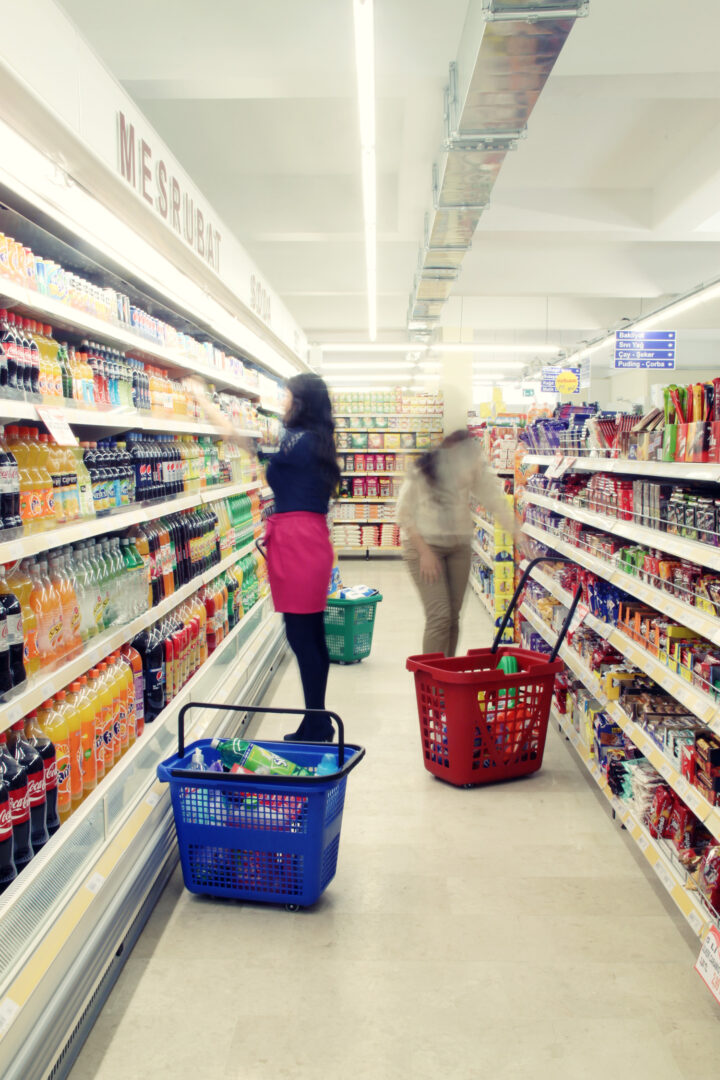
How to reduce hidden operating costs: why unit price is no longer enough
A guide for Procurement, Operations and Supply Chain teams that need to evaluate shopping trolleys and baskets based on total cost of ownership, supply continuity and real operational risk.
Quick answer
Reducing hidden operating costs is not about buying cheaper trolleys or baskets, but about choosing solutions that last longer, generate fewer incidents, require fewer replacements and can be supplied reliably throughout their entire life cycle. Unit price is only one part of the decision; the real cost shows up in day-to-day operations.
When a retailer starts a procurement process for trolleys or baskets, price often becomes the main criterion for comparison. That's understandable: it's an objective figure, easy to measure and simple to justify. However, in an environment where margins are increasingly tight and chains are looking to maximize the efficiency of every asset, the purchase price represents only part of the real cost.
The truly profitable decision is not to acquire the cheapest product, but to choose the one that will generate the lowest operating cost throughout its useful life. Price is just one data point; total cost is the strategy.

Hidden costs begin once the purchase ends
Once installed in the store, trolleys and baskets stop being an investment line item and become just another part of daily operations.
Every incident has a knock-on effect.
A broken trolley doesn't just mean the cost of replacing one unit. It involves staff time, administrative management, possible rush orders, disruptions to customer availability and, in many cases, a loss of efficiency that is rarely quantified.
That's why hidden operating costs don't usually appear in the initial budget, but they do end up reflected in the profit and loss account.
Premature replacements
When actual service life falls short of what was expected, the annualized cost of the product rises even if the initial price was lower.
Internal management time
Every incident requires review, removal, communication, validation, ordering or replenishment. That time also has a cost.
Lack of spare parts
The absence of available parts can force full unit replacement ahead of schedule.
Supply risk
If the supplier cannot respond to future replenishment needs, operations are exposed to rush purchases or non-standardized solutions.
The real indicator is Total Cost of Ownership
The most mature Procurement departments have stopped evaluating only acquisition cost and now incorporate Total Cost of Ownership analysis, also known as TCO.
This approach considers the full economic impact of the product throughout its entire life cycle.
| Variable | What should be analyzed | Impact on operations |
|---|---|---|
| Initial investment | Unit price, volume, transport and commercial terms. | Defines the entry cost, but not the total cost. |
| Real service life | Durability under intensive in-store use. | Reduces or increases the annualized cost of the equipment. |
| Replenishment | Frequency, cost and ease of replacing units. | Directly affects Procurement, Operations and Supply Chain. |
| Maintenance | Availability of spare parts, critical components and support. | Can extend service life and avoid full replacements. |
| Supply | Supplier's ability to respond to future needs. | Reduces risk in openings, refurbishments and replenishments. |
| Continuity | Stable long-term availability of the model. | Facilitates standardization across stores. |
When the analysis incorporates service life, replenishment, supply and incidents, price stops being the only relevant factor and often stops being the most important one.
The mistake of comparing only CAPEX
Many tenders still focus exclusively on the initial acquisition cost, i.e., CAPEX.
However, most of the economic impact occurs later, during the operational phase: OPEX.
A seemingly cheaper product can generate a higher total cost if it requires more replenishment, has a shorter service life, or increases the frequency of incidents.
The difference between the two perspectives is considerable. While CAPEX ends on the day of purchase, OPEX stays with the product for years.
Supply continuity is also part of the cost
Recent years have shown that logistics risk can no longer be considered a secondary factor.
Supply chain disruptions, volatility in international transport, and rising logistics costs have forced many retailers to review the criteria they use to select their suppliers.
According to the State of Grocery Europe 2025 report, produced by McKinsey & Company, margin pressure remains one of the main challenges for the sector, which has led many organizations to prioritize purchasing decisions aimed at improving operational efficiency and reducing risk.
At the same time, the Global State of Procurement & Supply 2025 report, published by the Chartered Institute of Procurement & Supply, highlights that supply chain resilience and risk management have become established as strategic priorities for Procurement departments.
In this context, having a supplier with proven industrial capacity, predictable response times and stable supply can have a much greater impact than a price difference of a few euros per unit.
Standardization also reduces costs
One of the least visible aspects of this type of purchase is the economic value of standardization.
When a chain works with different models, manufacturers or product generations, operational complexity increases. Spare part references, maintenance procedures, variability between stores and management needs all grow.
Reducing complexity also means reducing costs.
Replenishment planning
A uniform solution makes it easier to forecast future needs and avoid rush purchases.
Simpler maintenance
Fewer references and models reduce the management burden for internal teams.
Consistent image
Uniformity across stores improves the perception of order and operational control.
Lower logistical complexity
Standardization makes phased purchasing, replenishment and international rollouts easier.
The supplier is also part of the asset
In retail equipment projects, the supplier stops being a mere provider.
It becomes part of the operation.
Its ability to maintain product continuity, guarantee spare parts, respond to expansions or support new store openings directly influences total cost of ownership.
| Supplier criterion | Why it matters |
|---|---|
| Industrial capacity | Enables the supplier to respond to projects, replenishments and future needs without compromising operations. |
| Experience with retail chains | Reduces the risk of errors in complex rollouts or international purchasing. |
| Availability of spare parts | Helps extend service life and avoids premature full replacements. |
| After-sales support | Facilitates incident management and reduces internal time spent solving problems. |
| Logistics capacity | Provides predictability in deliveries, expansions and replenishments. |
| Regulatory compliance | Reduces risk exposure and facilitates validation by Procurement, ESG and Compliance teams. |
Compliance and traceability: factors already influencing the decision
Regulatory pressure in Europe continues to increase, and aspects such as traceability, durability, the circular economy and product documentation are gaining more and more weight in purchasing processes.
One example is Regulation (EU) 2025/40 on packaging and packaging waste, which reflects the European trend toward more transparent, responsible supply chains oriented around product life cycles.
Although this regulation does not directly govern trolleys or shopping baskets, it does show the direction the market is taking: suppliers are no longer evaluated solely on price, but also on their ability to provide stability, traceability, compliance and lower risk exposure.
How to correctly compare two offers
When two proposals look similar on paper, it's worth broadening the analysis beyond unit price.
An evaluation matrix should include, at a minimum, the following criteria:
| Criterion | Key question |
|---|---|
| Price | Is it comparable to equivalent products in terms of materials, design, durability and logistics conditions? |
| Service life | How many years can it remain in intensive use without generating significant incidents? |
| Replenishment | What will be the cost of replacing units throughout its entire life cycle? |
| Maintenance | Are spare parts and support available to extend service life? |
| Supply | Can the supplier respond to future openings, refurbishments or expansions? |
| Logistics risk | What is the exposure to disruptions, long lead times or variable transport costs? |
| Continuity | Is long-term availability of the same model guaranteed? |
| Support | What level of support does the supplier offer after delivery? |
This approach allows decisions to be based on economic impact rather than solely on the initial cost figure.
Choosing a supplier means reducing uncertainty
When trolleys and baskets are analyzed from a total cost of ownership perspective, the purchase stops being a simple product acquisition.
It becomes a decision that directly affects the business's operational efficiency.
At SB, we design and manufacture solutions built for intensive use in the retail environment, with a focus on durability, supply continuity and incident reduction.
Our goal is to help lower the total operating cost throughout the entire useful life of the equipment.
Because, ultimately, the best investment is not the one that costs the least on day one.
It's the one that causes the fewest problems over the next ten years.
Frequently asked questions
What is hidden operating cost?
It is the set of costs that appear after purchase and are usually not reflected in the initial price: replenishments, incidents, maintenance, internal management time, supply problems and loss of operational efficiency.
Why isn't unit price enough to compare trolleys and baskets?
Because two products with different prices can have very different service lives. A cheaper product may end up being more expensive if it breaks sooner, requires more replenishment or generates more incidents in-store.
What does Total Cost of Ownership or TCO mean?
Total Cost of Ownership calculates the full cost of a product over its entire useful life, including purchase, maintenance, replenishment, logistics, incidents, spare parts and operational management.
How can a retailer reduce hidden operating costs?
It can reduce them by selecting durable products, working with reliable suppliers, ensuring spare parts are available, standardizing models and evaluating total cost of ownership before awarding a purchase.
Why is supply continuity important?
Because retail chains need to respond to replenishments, new store openings, refurbishments and expansions. A supplier with stable supply reduces the risk of rush purchases, unavailability and loss of standardization.
What criteria should a supplier evaluation matrix include?
Besides price, it should include service life, replacement cost, maintenance, spare parts availability, supply capacity, logistics risk, after-sales support, regulatory compliance and experience with comparable chains.