Autonomous retail and smart baskets: how to create a frictionless shopping experience
A practical guide to understanding how autonomous retail, smart baskets and automated checkout are transforming the physical store.
Autonomous retail allows shoppers to enter a store, choose products and leave without going through a traditional checkout. Thanks to smart baskets, sensors, cameras, RFID and real-time management software, the store can detect selected items, calculate the amount and enable faster automatic payment. This model improves the shopping experience because it reduces waiting time, removes friction and makes the journey more comfortable for the customer. At the same time, it helps retailers optimize operations, manage customer flow more effectively and build a more efficient, connected point of sale that is better prepared for new consumer expectations.

What is autonomous retail?
Autonomous retail is a store model that reduces or removes the need to go through a traditional checkout. Instead of relying on manual scanning and a conventional payment process, the purchase is managed through technology that can identify products, register movements and calculate the total automatically.
Its main goal is to simplify the shopping experience, reduce waiting times and offer a more comfortable journey for both the consumer and the store operator.
- Sensors in baskets and carts to detect products.
- Smart cameras to recognize items and validate actions.
- RFID systems to register products automatically.
- Connected payment gateways to complete the purchase without friction.
Autonomous retail turns the physical store into a more agile, connected environment designed to reduce friction throughout the shopping journey.
How do smart baskets work in a store?
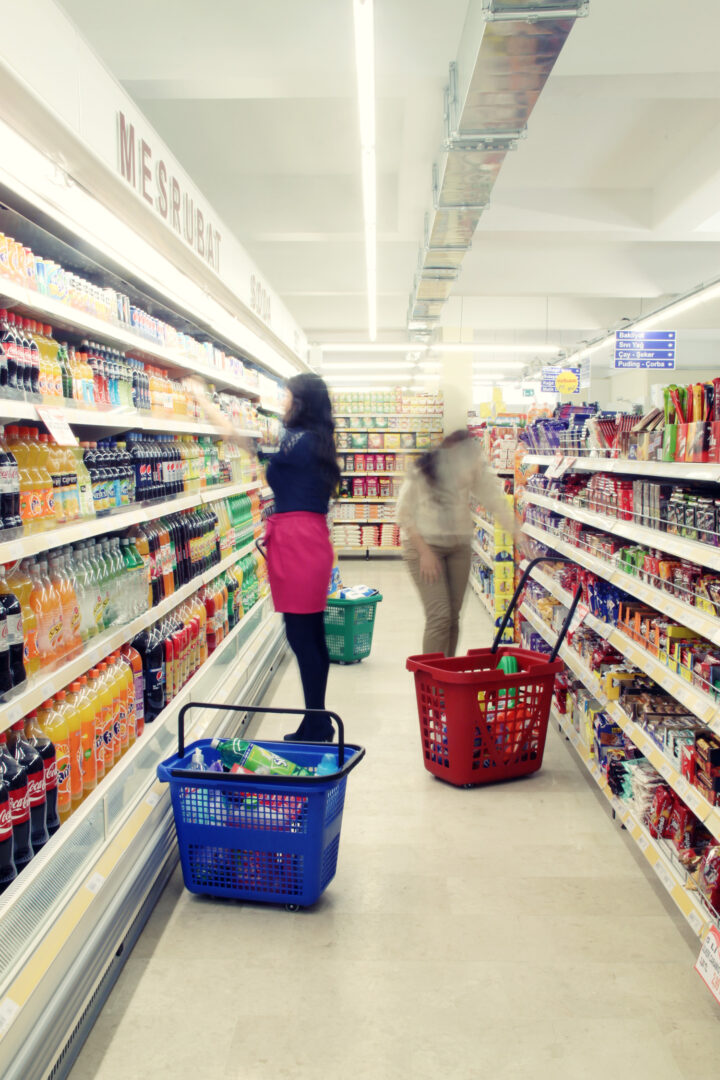
Smart baskets accompany the shopper during the purchase and register selected products in real time. Their operation combines hardware and software to make the experience faster, more accurate and more comfortable.
As the shopper adds items, the basket can detect the products and automatically update the purchase, reducing intermediate steps and making the in-store journey feel more natural.
Automatic registration
Smart baskets identify the products added and update the total amount immediately, without depending on a manual process at the end of the purchase.
Digital integration
These solutions can connect with mobile apps, digital payment systems and personalized promotional actions to create a more fluid and connected experience.
Why do smart baskets improve the shopping experience?
Smart baskets improve the experience because they bring speed, comfort, control and transparency. Shoppers can better understand what they are carrying, check the total in real time and complete the purchase in a more natural way.
When the process becomes clearer and less dependent on waiting, the sense of comfort inside the store also improves.
What technologies make autonomous retail possible?
Autonomous retail works through the integration of several technologies that operate in a coordinated way inside the point of sale. It does not depend on a single tool, but on an ecosystem that connects data capture, product validation and automatic payment.
This combination makes it possible to create a smarter store that can respond in real time to every customer interaction.
- Sensors to detect weight, movement or the presence of products.
- Smart cameras to recognize items and support purchase validation.
- RFID to identify products automatically and accurately.
- Management software to process data in real time.
- Connected payment systems to complete the purchase without a traditional checkout.
Autonomous retail technologies work best when they operate as a complete system that combines product detection, data processing and frictionless payment.
What advantages does autonomous retail offer customers and retailers?
Autonomous retail offers clear advantages to both sides because it improves the customer experience while also optimizing point-of-sale operations. This balance is one of the main reasons why the model is becoming more relevant.
When shopping becomes more fluid and the store operates with more visibility and less friction, the benefit is felt in both comfort and efficiency.
| Area | Main benefit | In-store impact |
|---|---|---|
| Customer | Faster and more comfortable shopping | Fewer queues, less waiting and more control over the purchase |
| Retailer | Greater operational efficiency | Better flow management, more data and less friction at checkout |
| Overall experience | More modern and connected store | Better adaptation to the expectations of the new consumer |
Benefits for the customer
For the customer, the main value is speed and comfort. Autonomous retail removes unnecessary steps and makes the shopping journey more fluid from start to finish.
- Faster and smoother shopping.
- Fewer queues and less waiting time.
- Greater comfort throughout the journey.
- Easier total visibility and payment.
- More modern and connected shopping experience.
Benefits for the retailer
For the retailer, the main advantage is a more efficient and more analytical operation. Checkout automation reduces friction and improves visibility into what is happening in the store.
- Reduced friction in the payment process.
- Optimization of resources and operational costs.
- Greater visibility into inventory and shopping behavior.
- Better customer flow management during peak hours.
- Ability to activate more personalized promotions and actions.
Why does cashierless retail improve operational efficiency?
Cashierless retail improves operational efficiency because it automates a critical part of the shopping journey and allows the store to reduce friction points. When the payment process stops being a bottleneck, the point of sale gains agility and responsiveness.
In addition, this model makes it possible to rethink the role of the commercial space. The store becomes less focused on checkout and can place more emphasis on experience, product presentation and customer relationship.
Removing the traditional checkout does not only improve customer comfort, it also helps the store run with more fluidity, more data and better operational decisions.
What use cases and trends are already visible in autonomous retail?
Autonomous retail is already present in supermarkets, convenience stores and other commercial environments looking for a more agile and digital shopping experience. It is not just a striking innovation, but a practical response to new needs in efficiency and service.
Current applications show that cashierless shopping already has a real place inside the physical store.
- Stores using RFID and sensors to identify products automatically.
- Smart baskets connected to mobile payment systems.
- Models that integrate real-time analytics to better understand consumer behavior.
- Environments that activate personalized promotions based on product selection.
If you want to see real implementation examples, you can explore these success stories.
Frequently asked questions
What is an autonomous store?
An autonomous store is a retail space that uses technology to automate part or all of the shopping process, reducing the need to go through a traditional checkout. The goal is to make the experience faster, more comfortable and less dependent on manual processes.
What do smart baskets do?
Smart baskets detect products, update the purchase in real time and enable a faster, more comfortable payment process. They can also integrate with digital systems that bring more visibility to the customer and more analytical capability to the retailer.
What technologies does autonomous retail use?
Autonomous retail uses a combination of sensors, smart cameras, RFID, management software and connected payment systems. The integration of these technologies makes it possible to automate product identification and reduce friction throughout the shopping journey.
What benefits does it bring to the retailer?
It brings greater operational efficiency, more visibility into shopping behavior, better control of customer flow and new options for commercial personalization. It also helps reduce bottlenecks at checkout and improves real-time decision-making.
Why does it improve the customer experience?
Because it reduces waiting times, removes friction at payment and makes shopping faster, simpler and smoother. The customer gains comfort and control throughout the whole process, from product selection to final payment.
Why does the future of retail depend on smarter shopping experiences?
Because consumers expect processes that are simpler, faster and better connected. Autonomous retail and smart baskets respond to that expectation by combining technology, operational efficiency and a more comfortable shopping experience inside the physical store.
Why does the future of retail depend on smarter shopping experiences?
Autonomous retail and smart baskets are redefining physical shopping because they combine customer comfort, retailer efficiency and technology applied to a real in-store experience. It is not only about automation, but about making the store work better for everyone.
At SB Shopping Basket, we understand this evolution as an opportunity to create retail spaces that are more connected, more agile and better prepared for the new retail landscape.
The shopping experience of the future will no longer be defined only by selling more, but by offering a simpler, faster and smarter experience on every store visit.